Get The Quote In 60 Minutes

Share your water quality and project requirements today to receive a tailored industrial water treatment system from our engineer team within 1 hour.
Popup Form

Stop Hard-Water Scale Before It Hits Boilers, Cooling, or RO.

Scale is expensive: it reduces heat transfer, drives maintenance, and increases failure risk in boilers and cooling systems. Our industrial water softener systems remove hardness reliably—helping you stabilize operations, protect downstream RO membranes, and reduce overall lifecycle cost.

Industrial Water Softener Systems for Boilers, Cooling & RO Pretreatment

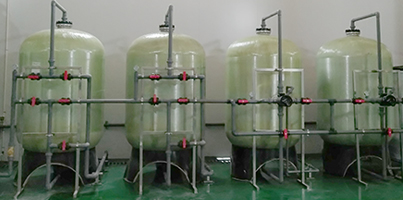
Water softener systems remove hardness (primarily calcium and magnesium) to prevent limescale in pipes, boilers, and heat exchangers, and to protect downstream processes. Softening uses ion exchange resin to replace hardness ions with sodium ions, then regenerates periodically.
Hardness removal you can rely on
Ion exchange softener units remove calcium and magnesium by exchanging them with sodium ions, helping prevent scale formation in equipment.
Controls that fit operations
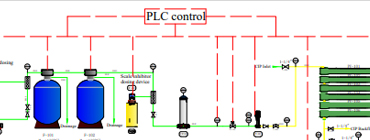
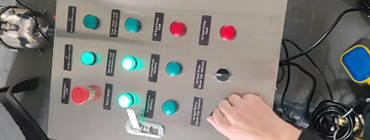
Fully automatic systems can be configured with timer (time-clock) or meter-initiated regeneration cycles, plus advanced PLC / digital staging options.
Designed for integration
Softened water can feed downstream RO systems to reduce scaling risk; softeners are common in industrial, municipal, and institutional service.

Why hardness removal converts (boilers, cooling, RO)

This section connects “water chemistry” to operational outcomes—so operators, engineers, and procurement can align quickly.
media filtration

Boiler makeup water

Hardness drives scale on heat transfer surfaces. That means efficiency losses, higher fuel consumption, and increased failure risk.
  • Symptoms: rising ΔT, frequent descaling
  • Goal: stable heat transfe
media filtration

Cooling-tower makeup

As cycles of concentration rise, scaling potential rises too. Hardness control supports more stable cooling-water management.
  • Symptoms: scale on fill / HX
  • Goal: predictable chemistry
media filtration

RO pretreatment

Softening reduces scaling risk upstream of membranes. It’s a common upstream step when hardness threatens RO performance and cleaning frequency.
  • Symptoms: scaling, higher CIP
  • Goal: protect membranes

How a hard water treatment system works (ion exchange softener units)

In ion exchange softening, resin beads remove calcium and magnesium by exchanging them for sodium ions. The system then regenerates periodically with salt/brine to restore capacity.
Typical Process Flow
Raw water → (Optional filtration) → Softener resin tank → Soft water to users / RO → Regeneration brine cycle (site-specific discharge)

01. Hard water enters

Raw water flows into the mineral/resin tank where the hardness ions are captured by resin beads.

02. Ion exchange

Calcium/magnesium are exchanged with sodium ions (soft water exits to your process).

03. Capacity used up

Once exchange sites are depleted, the system triggers regeneration (timer or meter-initiated control).

04. Regeneration

Brine recharges the resin; waste brine is discharged/handled per local site requirements..

Simplex vs Duplex Softener System vs Triplexr treatment system works (ion exchange softener units)

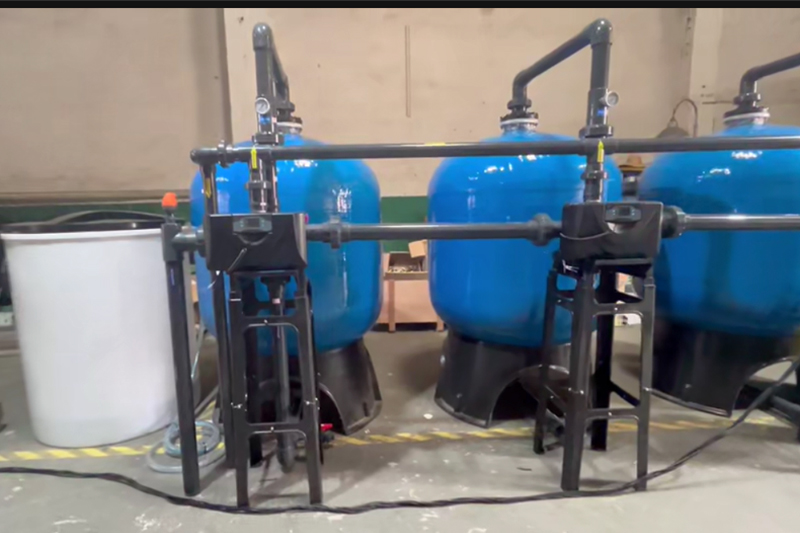
Choose the right configuration based on continuity needs. Duplex/triplex designs help maintain soft water supply during regeneration and support redundancy.
ConfigurationWhat it isBest fitProsTradeoffs
SimplexSingle vessel; regeneration takes the unit offline (unless you use bypass or storage).Non-critical processes, batch operations, sites with buffer tanks.Lower CAPEX, simpler plumbing/controls.Potential downtime or hardness “breakthrough” if buffering/bypass is mismanaged.
Duplex
Two vessels (duty/standby or alternating). One can serve while the other regenerates.
Boilers, continuous cooling demand, RO feed where continuous soft water reduces scale risk.Higher uptime, better continuity, redundancy.Higher CAPEX/footprint; more valves/instrumentation.
Triplex / MultiThree or more vessels (or multiple units in parallel) for capacity + redundancy.High-flow, critical lines, multi-train plants, expansion plans.N+1 resilience, flexible maintenance, scalable capacity.Highest complexity; requires solid controls and commissioning discipline.
Commercial water softeners vs industrial systems
Industrial systems typically require higher flow, stronger automation, and clearer integration with plant utilities. Options often include larger tank ranges, heavy-duty valves, and PLC/digital staging.
Industrial needs: continuity + integration
Controls: PLC / SCADA signals
Packaging: skid or packaged
Sizing starts with the right inputs
To size correctly, share application, hardness (as CaCO₃), average/peak flow, and whether you require 24/7 soft water. Discharge constraints can affect the final design and options.
Key inputs: hardness + flow + uptime
Nice-to-have: iron/turbidity notes
Site: discharge constraints

Regeneration, brine discharge & OPEX

Operators care about reliability and waste. This section addresses “late-stage objections” up front: regeneration strategy, salt usage, and brine handling.

Regeneration strategy

Choose time-clock regeneration (scheduled) or meter-initiated regeneration (demand-based). Metering can reduce unnecessary cycles when usage varies.

Salt & brine system

Industrial softeners use a brine tank and safety controls (e.g., refill shutoff) to support stable regeneration without overflow.
Waste handling

Regeneration creates waste brine. Discharge rules vary worldwide—so brine routing, neutralization, or collection is engineered to local requirements.

Applications

Common industrial and commercial use cases for hardness removal and scaling-risk reduction.
Boiler & Steam Plants
Softened makeup water reduces scale risk in boilers and improves reliability of heat transfer equipment.
Cooling Towers & Chillers
Hardness control supports stable cooling-water management and helps reduce deposits on heat exchangers.
RO Pretreatment Trains
Softening upstream of RO helps reduce membrane scaling potential and can lower cleaning frequency.
Manufacturing Utilities
General plant utility water where scale drives downtime, maintenance, or quality issues.
Municipal / Institutional
Facilities needing hardness removal for infrastructure protection and operational consistency.
Food & Beverage / Hospitality
Hard water can damage equipment and increase maintenance—softening improves predictability.

Request a Quote / Talk to an Engineer

Send your hardness, flow, and continuity requirement (simplex vs duplex vs triplex). We’ll recommend the right configuration and options for your site.
Product Form
Direct contact
Prefer email or WhatsApp? Put your real contact here:
Phone:+1 (000) 000-0000
esponse time:within 24 hours
FAQ