Before you go, our engineers can review your water quality, process needs, and budget to suggest the right system - share a few details now and get expert feedback
Get The Quote In 60 Minutes
Share your water quality and project requirements today to receive a tailored industrial water treatment system from our engineer team within 1 hour.
Industrial Deionization & Ion Exchange Water Treatment Systems
Remove dissolved mineral salts (not just hardness) to protect boilers, stabilize production quality, and meet high-purity water requirements in pharma, electronics, power, and process industries. Built as twin-bed or mixed-bed designs—engineered for reliability, repeatability, and ROI.
What are industrial deionization (ion exchange) systems?
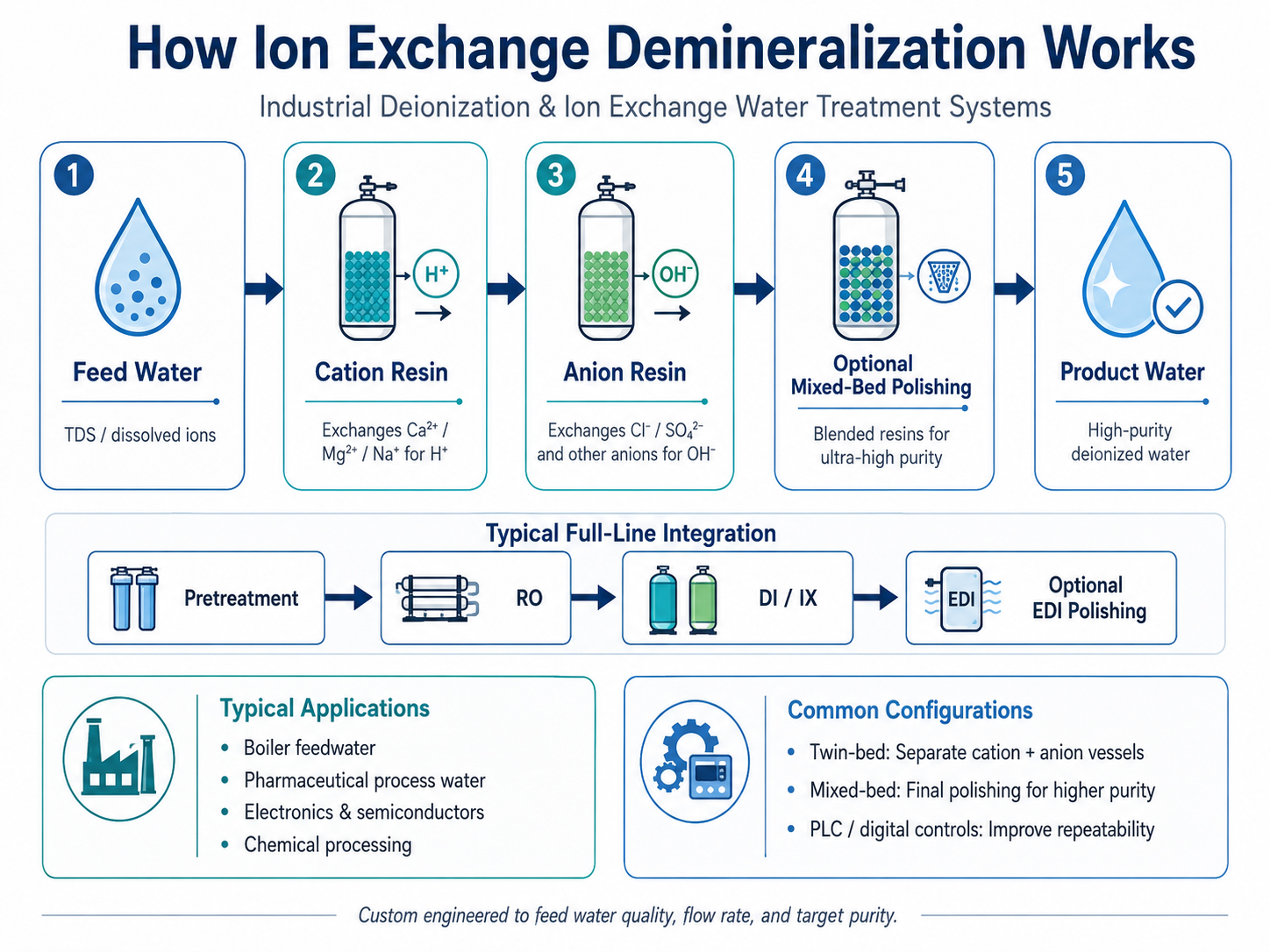
Ion exchange (also called deionization or demineralization) uses resin beds to swap unwanted dissolved ions (like calcium, magnesium, sodium, chloride) for H⁺ and OH⁻—producing high-purity water for industrial use.
↔
Choose the right layout
Twin-bed systems use separate cation and anion vessels. Mixed-bed systems blend resins for polishing and ultra-high purity— often in a single vessel.
⚡
Designed for real operations
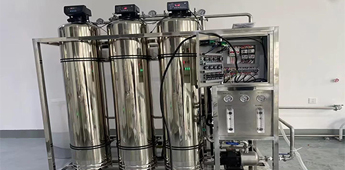
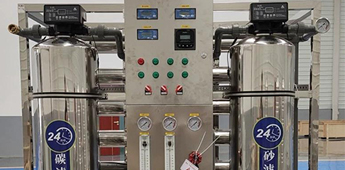
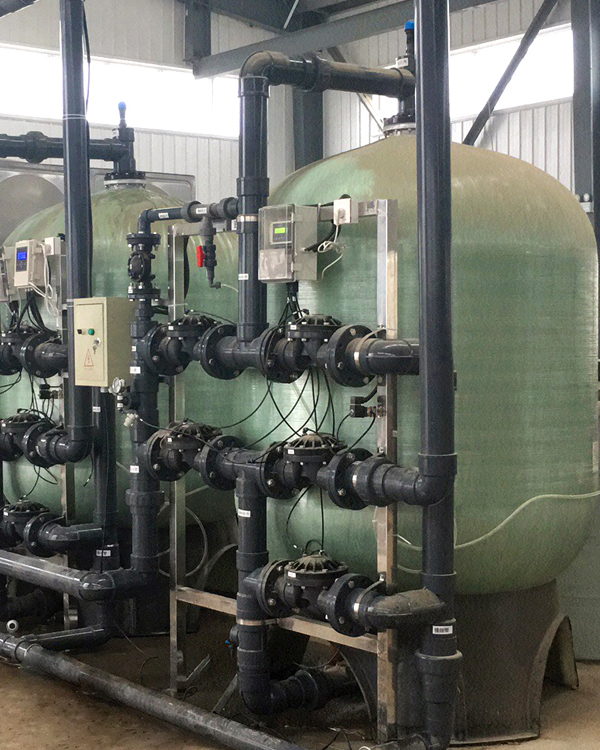
Skid-mounted packages with valves, controls, and regeneration logic help teams reduce downtime, simplify maintenance, and keep quality consistent shift to shift.
✓
DI removeXs more than hardness
Unlike water softeners (hardness exchange), deionization targets a broader range of ions to reduce total dissolved salts and improve water purity for sensitive processes.
Custom engineered
Designed to your feed water, flow rate, and target purity
Twin-bed or mixed-bed
Flexible layouts for demineralization and polishing
Twin-bed: Separate cation + anion vessels. Great for robust demineralization and easier resin management.
Mixed-bed: Blended resins for final polishing—often used when very high purity is needed.
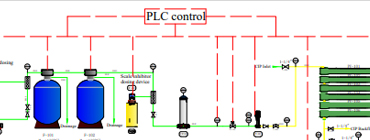
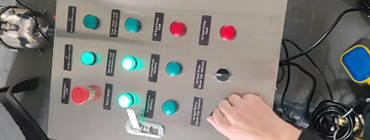
Controls: PLC/digital staging can improve repeatability across service and regeneration modes.
Ion exchange vs. water softeners
Hardness control vs. total ion removal Water softeners mainly exchange hardness ions (Ca²⁺/Mg²⁺) for sodium. Deionization goes further—targeting a wider set of dissolved ions to reduce overall salinity (TDS) and reach higher purity requirements.
Criteria
Water Softener
Deionization (DI / IX)
Primary goal
Remove hardness (scale control)
Remove a broad range of dissolved ions
Typical use
Pretreatment, utility protection
High-purity process water, polishing
Result
Hardness reduced; TDS mostly unchanged
Much lower ionic content; higher purity
Common pairing
Before RO to reduce scaling risk
After RO for polishing; before/with EDI
When DI is ideal
Boilers, pharma, electronics, chemical processing, labs
When softening is enough
Hardness scaling control for many utility systems
Best practice
Match tech to feedwater + required output quality
Applications of ion exchange demineralization
Designed for operators, maintenance teams, and decision-makers who need predictable water purity and low lifecycle cost.
Power & Boilers
High-purity boiler feedwater helps reduce scaling, corrosion, and unplanned shutdowns—especially for high-pressure systems.
Boiler feed and steam generation
Cooling and utility water protection
Reduced chemical cleaning and downtime
Pharmaceutical & Healthcare
Improve consistency for water used in manufacturing, sterilization, and laboratory processes where purity matters.
Process and rinse water
Lab-grade supply
Support for regulated environments
Electronics & Semiconductors
Stable, low-ion water supports precision cleaning and rinsing processes and protects yields in sensitive production lines.
Wafer and component rinsing
Cleanroom utilities
Reduced ionic contamination risk
Integration with your full water treatment linePretreatment → RO → DI/IX → (Optional) EDI Polishing Ion exchange systems typically perform best with the right upstream protection. Pair with multimedia filters and cartridge filtration, add ultrafiltration (UF) where turbidity/SDI is challenging, use RO to reduce TDS load, and finish with DI/IX or EDI for final polishing.
Tell us your basics—our engineers will respond with the right configuration, budgetary estimate, and timeline.
Why plants choose ion exchange
Helps prevent scale and corrosion in boilers, heat exchangers, and critical utilities.
Stabilizes water quality to protect yields in pharmaceuticals and electronics manufacturing.
Automation options (PLC/digital staging) support consistent operation and regeneration.
Integrates easily with pretreatment (UF/RO/media filters) and post-polishing (EDI).
Tip: Share your feed TDS, hardness, silica (if available), and target resistivity—our team will size the right configuration.
FAQ
Industrial Deionization & Ion Exchange Water Treatment Systems FAQ
Twin-bed systems use separate cation and anion vessels—often preferred for robust demineralization and simpler resin management. Mixed-bed units blend resins for polishing and higher purity, commonly used when tighter water quality is required.
Both use ion exchange chemistry, but the purpose differs. Softeners mainly remove hardness (calcium/magnesium) by exchanging for sodium. Deionization targets a broader set of ions to reduce overall salinity and improve purity.
Yes. UF/media filters are common pretreatment for turbidity and fouling control. RO reduces TDS load. DI/IX can then polish RO permeate to higher purity. EDI may be added for continuous ultra-pure polishing in some applications.
Yes—systems can be supplied with PLC-based or digital staging controls to support consistent service and regeneration operation, with clear alarms and operator prompts.