Talk To Our Engineer Now
Before you go, our engineers can review your water quality, process needs, and budget to suggest the right system - share a few details now and get expert feedback
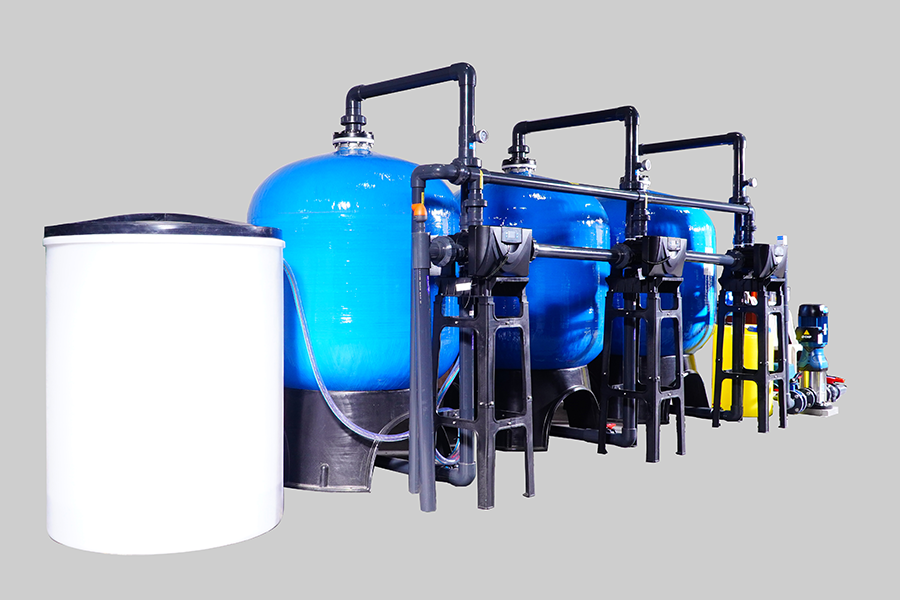
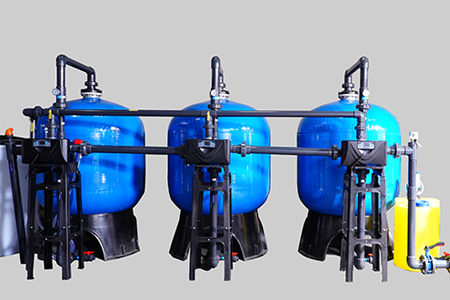
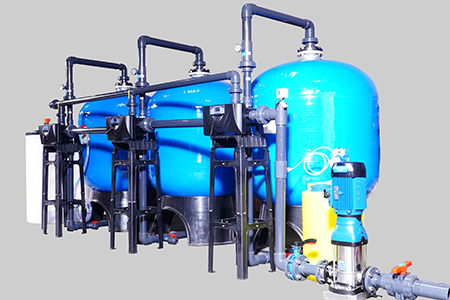
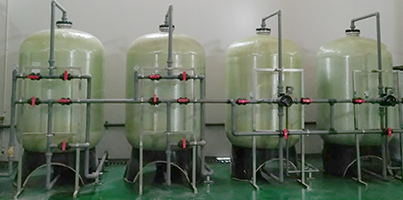
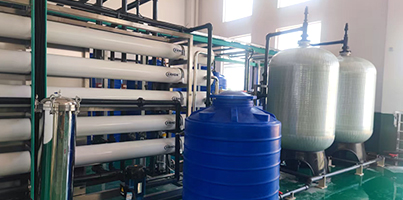
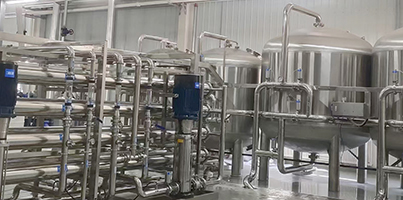
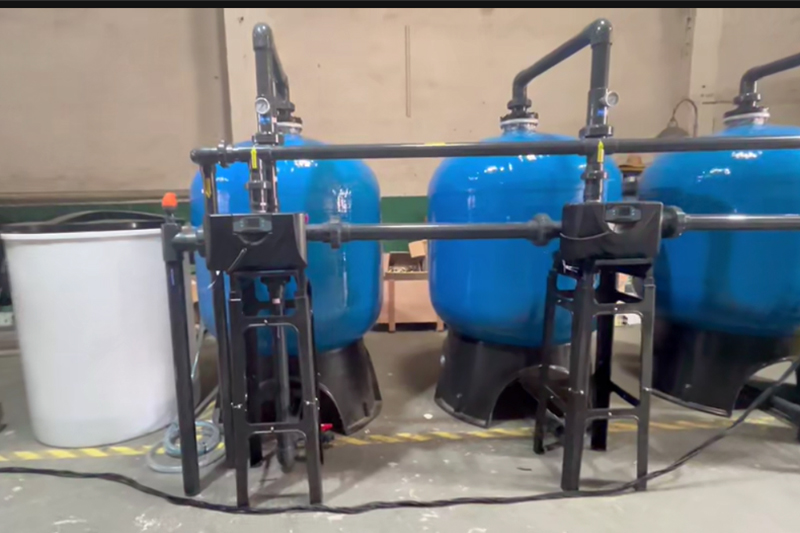
| Configuration | What it is | Best fit | Pros | Tradeoffs |
| Simplex | Single vessel; regeneration takes the unit offline (unless you use bypass or storage). | Non-critical processes, batch operations, sites with buffer tanks. | Lower CAPEX, simpler plumbing/controls. | Potential downtime or hardness “breakthrough” if buffering/bypass is mismanaged. |
| Duplex | Two vessels (duty/standby or alternating). One can serve while the other regenerates. | Boilers, continuous cooling demand, RO feed where continuous soft water reduces scale risk. | Higher uptime, better continuity, redundancy. | Higher CAPEX/footprint; more valves/instrumentation. |
| Triplex / Multi | Three or more vessels (or multiple units in parallel) for capacity + redundancy. | High-flow, critical lines, multi-train plants, expansion plans. | N+1 resilience, flexible maintenance, scalable capacity. | Highest complexity; requires solid controls and commissioning discipline. |
At Aqurion, we prefer to select a water softener around your actual water rather than start with a generic equipment size.
Hardness level, water use, peak flow, plumbing size, installation space and regeneration preferences all influence the final system. If sediment, chlorine, iron, taste, odor or drinking water quality also needs to be addressed, we can consider those requirements within the overall treatment approach.
Send us your water analysis, hardness level, number of users or fixtures, estimated flow requirement and available installation information. We can review these details and help determine an appropriate Aqurion water softener or combined water treatment configuration for your project.
Most conventional water softeners use a process called ion exchange.
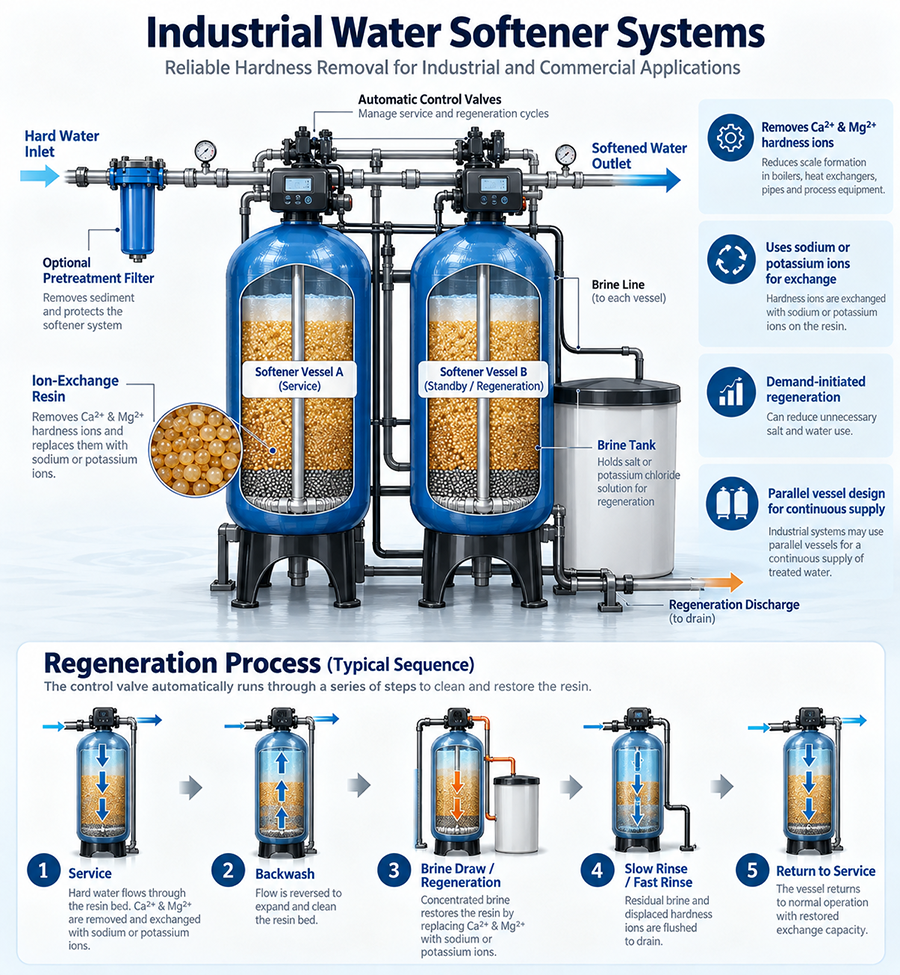
Inside the resin tank, the incoming hard water passes through resin beads. Calcium and magnesium are positively charged hardness minerals, while the ion-exchange resin contains negatively charged sites that attract these ions.
During the softening process, calcium and magnesium are retained by the resin and exchanged for sodium ions or, in systems designed for it, potassium ions. The treated water then continues through the property with substantially less hardness.
At Aqurion, we look at this process as part of the complete operating cycle rather than only the service stage.
Once the resin beads have accumulated enough hardness minerals, they need to be regenerated. Depending on the valve and system design, regeneration can include:
The brine tank provides the concentrated salt solution used to restore the resin’s ion-exchange capacity.
Because regeneration consumes both water and salt, we consider actual hardness, water use and required capacity when helping select a system. An appropriately configured softener should balance treatment performance with practical operating requirements.
A water softener is more than a resin tank. At Aqurion, we consider how the individual components work together within the complete water system.
The resin tank contains the ion-exchange media responsible for removing hardness minerals. The control valve manages the direction of water flow and controls the regeneration sequence.
The brine tank stores the salt or potassium solution required for resin regeneration. Inlet and outlet connections allow us to integrate the system into the main water supply, while a bypass provides a practical way to isolate the softener during servicing or when untreated water is temporarily required.
We also review installation-related factors such as:
For water softener installation involving significant plumbing modifications, we recommend following applicable local requirements and appropriate professional installation practices.
The main objective is to reduce the hardness minerals responsible for scale.
With less calcium and magnesium in the treated water, there is less opportunity for scale buildup around fixtures, shower surfaces and inside plumbing.
Soft water also allows soaps and detergents to work more effectively because they do not have to react with the same level of hardness minerals. In practical use, this may mean improved lather, fewer deposits on glassware and less residue around frequently cleaned surfaces.
For water-using appliances such as dishwashers, washing machines and water heaters, controlling scale can also reduce one of the factors that contributes to mineral accumulation.
We avoid claiming that a softener will automatically extend the life of every appliance by a specific amount. Appliance lifespan depends on many operating and maintenance factors. What we can do is address the hard minerals that contribute to scale inside plumbing and appliances.
At Aqurion, we make a clear distinction between conventional water softening and water conditioning.
A conventional ion-exchange water softener actually removes calcium and magnesium hardness from the water through ion exchange.
A water conditioner is a broader category. Depending on the technology, it may attempt to alter how minerals behave rather than physically remove hardness minerals from the water.
This distinction is particularly important when evaluating products marketed as salt-free water softeners.
Many salt-free systems are more accurately described as conditioners because they do not perform the same ion-exchange process as a conventional softener. They may be used for scale-management applications, but that does not mean the treated water has had its calcium and magnesium removed.
We therefore recommend defining the treatment objective first.
| Treatment | What We Use It For | Removes Hardness Minerals? | Typical Application |
|---|---|---|---|
| Ion-exchange water softener | Hardness reduction and scale control | Yes | Whole-home hard water treatment |
| Water conditioner | Technology-dependent scale management | Not necessarily | Applications where conventional softening is not required |
| Filtration | Sediment, chlorine or selected substances depending on media | Usually not its primary purpose | General water quality treatment |
| Reverse osmosis | Reduction of a range of dissolved substances | Can reduce calcium and magnesium | Primarily drinking water and point-of-use treatment |
If your main objective is to reduce measured hardness, we recommend confirming what the proposed technology actually removes rather than relying only on the product name.
Sometimes.
A water softener is designed primarily to address hardness. It does not automatically solve every water quality problem.
If your incoming water contains sediment, chlorine, undesirable taste or odor, iron or another specific contaminant, we may recommend additional treatment depending on the water analysis.
For example, we may integrate:
We do not treat reverse osmosis and water softening as interchangeable processes.
A whole-home softener is generally intended to reduce hardness throughout the property. A reverse osmosis system uses membrane separation and is commonly applied where a higher level of dissolved-solids reduction is required, particularly for drinking water.
For some properties, the most suitable solution is therefore not one piece of equipment but a coordinated treatment train.
If you already have a water analysis, send it to us. We can review the results and help determine whether you need softening alone or a combined Aqurion water treatment solution.
Regeneration restores the ion-exchange capacity of the resin after it has accumulated calcium and magnesium.
The required frequency is not the same for every installation. It depends on factors such as:
For this reason, we do not use a universal claim such as “regenerates every seven days” for every softener system.
During normal ownership, the brine tank should maintain the appropriate salt level, and the equipment should be checked periodically to confirm that regeneration and service operation are functioning correctly.
Where a demand-initiated valve is used, regeneration can be based on actual or calculated water consumption rather than only a fixed calendar interval.
If salt consumption, regeneration water or operating frequency is an important project consideration, let us know during system selection. We can take these priorities into account together with your hardness load and required treated-water capacity.
We recommend starting with a hardness test. Scale around fixtures, spots on glassware and poor soap lather can indicate hard water, but an actual water analysis provides a better basis for selecting treatment.
Yes. A conventional ion-exchange water softener reduces calcium and magnesium by exchanging these hardness ions for sodium or potassium ions on the resin.
That depends on your water hardness, system capacity, water use and valve settings. We prefer to calculate regeneration requirements around the actual application rather than specify a universal interval.
When sodium chloride is used for regeneration, the ion-exchange process replaces calcium and magnesium ions with sodium ions. The amount introduced depends on the amount of hardness removed and the system configuration. Potassium may also be used with systems designed for it.
Possibly. A softener addresses hardness. If your water also contains sediment, chlorine, iron, taste, odor or other contaminants, we may recommend additional filtration or another treatment stage.
We evaluate measured hardness together with water consumption, peak flow demand, plumbing conditions and the desired regeneration strategy. Providing us with a water analysis and basic property information gives us a more reliable basis for system selection.