Talk To Our Engineer Now
Before you go, our engineers can review your water quality, process needs, and budget to suggest the right system - share a few details now and get expert feedback

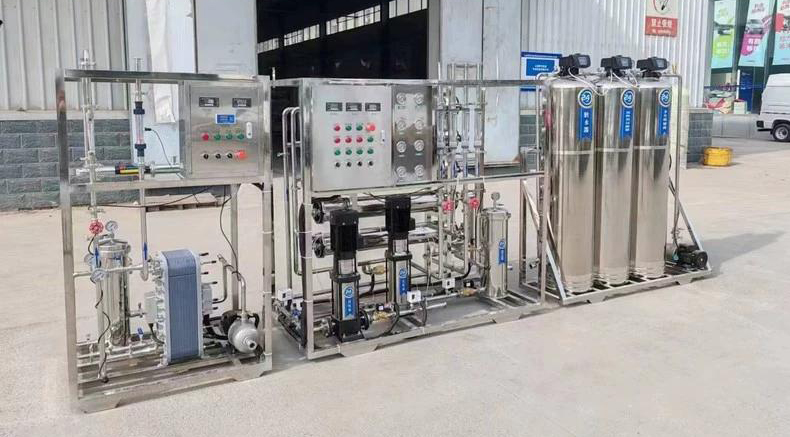
Aqurion cooling water treatment solutions can be configured around the specific requirements of an industrial cooling system rather than a fixed equipment package. Depending on the project, the treatment process may involve pretreatment, filtration, water softening, chemical treatment, automated dosing, biological control, conductivity-based blowdown or monitoring equipment. Selection starts with make-up water analysis and operating data so that the required treatment stages can be matched to the actual cooling tower and site conditions.
A simplified process view for landing-page visualization.
A quick website-friendly comparison table for engineers, facility managers and procurement teams.
| Treatment Path | Best Use | Controls | Advantages | Does not remove dissolved salts or replace disinfection |
| Side-stream Filtration | Dirty basins, solids loading, dusty locations | Suspended solids, silt, debris, fouling support | Lower cleaning load, better heat-transfer stability, compact retrofit | Downtime must be managed. |
| Softening | Hard makeup water and scale-sensitive systems | Calcium and magnesium hardness | Reduces scale potential and protects downstream equipment | Requires salt/regeneration or alternative design consideration |
| UF / RO Pretreatment | Reuse water, high TDS, difficult raw water | Particles, colloids, dissolved solids depending on process | Improves makeup-water quality and supports higher system stability | Requires pretreatment, membrane care and reject-water planning |
| RO + EDI / Mixed-Bed DI | Adjacent high-purity utility water for semiconductor, pharma, labs | Residual ions and polishing-duty contaminants | Supports high-purity water generation beyond standard cooling treatment | Not normally required for the entire cooling tower loop |
A practical project starts with engineering information rather than selecting treatment chemicals or equipment from a standard list.
1. Collect project data.
We review available make-up water analysis, cooling tower operating information, circulation rate, cooling capacity, temperature conditions and existing system information.
2. Identify treatment risks.
The evaluation considers scaling, cooling tower corrosion, suspended solids, deposit formation, fouling and biological growth together with required cycles of concentration and blowdown conditions.
3. Define the treatment approach.
The process may include filtration, water softening, chemical dosing, inhibitor treatment, biocide dosing, conductivity control or additional project-specific treatment.
4. Select equipment and controls.
Treatment stages, pumps, filtration equipment, instruments and controls are selected according to the defined process and automation requirements.
5. Confirm system interfaces.
Connection points, available installation space, make-up water supply, blowdown water routing, electrical interfaces and integration with the existing cooling water system should be confirmed before equipment production or installation.
6. Integrate and verify the system.
Where applicable to the project scope, equipment can be manufactured or integrated and relevant functional checks completed before shipment.
Installation, commissioning, documentation and operating support requirements should be agreed according to the individual project scope rather than assumed to be identical for every installation.
A cooling tower removes heat partly by evaporating water. As evaporation continues, dissolved minerals remain in the recirculating water and become more concentrated. Airborne dust and other contaminants can also enter the tower. Without suitable water treatment, these conditions can contribute to scaling, corrosion, sediment accumulation, biological growth and fouling of heat-transfer surfaces.
ASHRAE notes that evaporative cooling can rapidly increase the concentration of dissolved solids and impurities, while airborne contaminants may contribute to scale, corrosion and deposits. Treatment therefore needs to address the actual combination of water chemistry, operating temperature, evaporation, make-up water and equipment materials rather than relying on a single treatment method.
Scale can restrict water flow and reduce heat transfer. Corrosion can damage piping, heat exchangers and other metallic components. Suspended solids may accumulate in the basin or cooling tower fill, while microbiological activity can create biofilm and contribute to fouling. A balanced cooling tower water treatment program considers these conditions together.
There is no universal water treatment program for every cooling tower. The correct design depends on what enters the system, how the tower operates and what materials must be protected.
Project evaluation normally begins with the quality of the cooling tower make-up water. Hardness, calcium, alkalinity, conductivity or dissolved solids, pH and other relevant parameters help determine scaling and corrosion tendencies. Hard water, for example, may require a different treatment plan from water with low mineral content but higher corrosion potential.
Operating data are equally important. Engineers may review:
These inputs help determine whether the project requires filtration, chemical dosing, water softening, conductivity control or another combination of water treatment solutions.
A complete cooling tower treatment strategy may use several technologies, but not every project requires every treatment stage.
Filtration can remove suspended solids carried into or formed within the system. Side-stream filtration is often considered where airborne particles, process contamination or sediment place a significant solids load on the cooling water. The U.S. Department of Energy notes that side-stream filtration can reduce suspended solids and organics that contribute to fouling, scaling and microbiological growth, while emphasizing that filtration does not replace chemical treatment.
Scale and corrosion control may involve appropriate inhibitor programs selected according to water chemistry and system metallurgy. Corrosion inhibitors and scale inhibitors must be compatible with the operating conditions and other treatment chemicals.
Biological control may use oxidizing and non-oxidizing biocide programs where appropriate. Product selection, dosing method and monitoring requirements depend on the cooling tower system and local requirements.
Water softening or other pretreatment may be considered when make-up water characteristics make it beneficial. Pretreatment should be selected from actual water analysis rather than automatically specified for every system.
Automated monitoring and blowdown control can help maintain the chosen operating range and respond to changes in system water conditions.
| Cooling Tower Condition | Engineering Concern | Possible Treatment Approach |
|---|---|---|
| High mineral concentration | Scaling and deposits | Blowdown control, inhibitor program, pretreatment where appropriate |
| Corrosive water conditions | Metal loss and equipment damage | Water chemistry adjustment and corrosion inhibitor |
| High suspended solids | Fouling and sediment | Side-stream or other suitable filtration |
| Biological growth | Biofilm and microbiological risk | Biocide program, monitoring, cleaning and water management |
| Variable water chemistry | Unstable treatment conditions | Monitoring, automated control and treatment adjustment |
| Excessive dissolved solids | Scale and corrosion potential | Conductivity monitoring and controlled blowdown |
As cooling towers use evaporative cooling, relatively pure water leaves the system as vapor while dissolved minerals remain behind. The resulting increase in dissolved solids is managed partly through blowdown: removing concentrated system water and replacing it with fresh make-up water.
Cycles of concentration describe the degree to which dissolved constituents in the circulating water have become concentrated compared with the incoming make-up water. DOE guidance explains that increasing cycles can reduce blowdown and make-up demand, but the acceptable level is constrained by make-up water quality, system chemistry and the treatment program.
This means maximizing cycles without considering water chemistry is not a sound engineering objective. Excessive concentration can increase scaling or corrosion risk. The goal is to optimize the balance between reliable cooling tower operation, water management and treatment requirements.
Conductivity-based controls may be used to automate cooling tower blowdown where appropriate. The operating setpoint should be established from the actual treatment program and allowable system water chemistry rather than copied from another installation.
Biological control is an important part of cooling tower water management because evaporative cooling equipment can generate aerosols. CDC guidance identifies sediment and biofilm, temperature, water age and disinfectant residual as important factors affecting Legionella growth. It recommends a water management program that addresses operation, maintenance, cleaning, water parameters, disinfectant control and system-specific conditions.
A cooling tower chemical treatment program alone should not be presented as a complete Legionella risk-management strategy. Water management, equipment maintenance, cleaning, monitoring, biological control and operating practices need to work together. ASHRAE Standard 188 establishes minimum legionellosis risk-management requirements for applicable building water systems, while ASHRAE Guideline 12 provides additional guidance.
CDC also recommends considering automated anti-scale, anti-corrosion and disinfectant addition, automated blowdown and filtration where system conditions warrant it. Site owners and operators should establish their water management plan according to applicable regulations, standards and facility-specific risk assessments.
Cooling water treatment solutions can be applied across facilities that operate open or closed-circuit evaporative cooling towers and related recirculating water systems. The required treatment configuration varies significantly between applications.
Typical projects may include:
Data centers, for example, may operate significant cooling loads for long periods, making both water quality and water use important design considerations. DOE identifies cycles of concentration and blowdown management as important factors in cooling water efficiency for data center facilities.
Process requirements should always be reviewed individually, particularly where contamination, metallurgy, production hygiene or local discharge requirements affect treatment selection.
The more accurately the operating conditions are defined, the more effectively the water treatment system can be evaluated. When requesting a cooling tower treatment solution, provide as much of the following information as available:
If only part of this information is available initially, the missing engineering data can be identified during technical discussion before the final treatment configuration is determined.
Evaporation concentrates dissolved minerals in recirculating water, while airborne particles and microorganisms can enter the system. Without proper water treatment, these conditions may contribute to scaling, corrosion, suspended solids, fouling, deposits and biological growth, affecting heat transfer and equipment reliability.
Selection begins with water analysis and system operating data. Engineers consider make-up water chemistry, cooling load, circulation rate, operating temperature, cycles of concentration, materials of construction, biological requirements and existing problems before defining the treatment process.
Higher cycles of concentration can reduce blowdown and fresh make-up water demand, but they also increase dissolved mineral concentrations. The practical operating limit therefore depends on water chemistry and the treatment program rather than a universal target value.
Scaling can occur when dissolved minerals become concentrated and precipitate under system conditions. Corrosion is influenced by factors including water chemistry, pH, dissolved constituents, metallurgy and treatment control. Both conditions should be evaluated when defining the cooling tower water treatment program.
Filtration may be useful when the cooling system has significant suspended solids, airborne contamination, sediment or fouling. Side-stream filtration can reduce particle loading, but it should be considered as one element of the overall treatment program rather than a substitute for biological or chemical control.
Blowdown may be controlled using conductivity monitoring because conductivity provides an indication of increasing dissolved mineral concentration. Automated controls can discharge concentrated water when an established setpoint is reached. The setpoint should reflect the make-up water chemistry and treatment limits.
At minimum, provide available water analysis and basic cooling tower operating data. Circulation rate, cooling capacity, make-up water source, operating temperatures, existing treatment, current problems and required automation help define a technically appropriate cooling water treatment solution.
A reliable treatment plan starts with the actual water and operating conditions of your cooling tower—not a standard equipment list.
Send us your water analysis, cooling tower circulation rate, cooling capacity, make-up water source, operating temperatures, existing treatment method and any current scaling, corrosion, fouling or biological-control concerns. Our team can review the project requirements and discuss an appropriate treatment process, equipment configuration and control approach for your cooling system.