Talk To Our Engineer Now
Before you go, our engineers can review your water quality, process needs, and budget to suggest the right system - share a few details now and get expert feedback
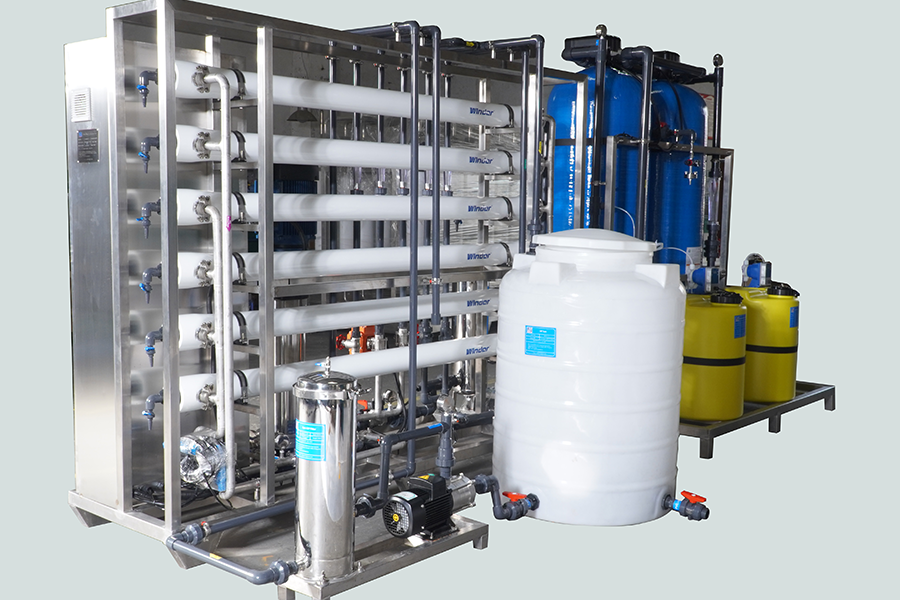
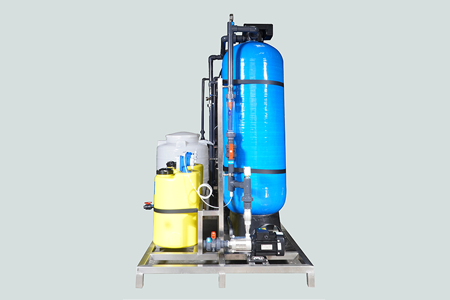
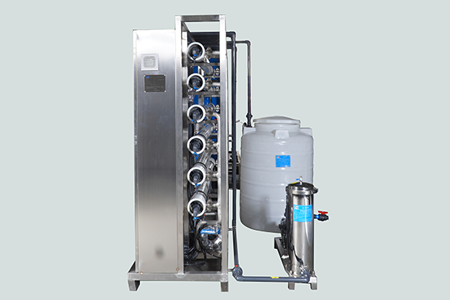
BWRO systems can be configured around actual feed-water conditions and project objectives. Available configurations may vary according to treatment capacity, source-water chemistry, product-water targets, pretreatment, membrane arrangement, instrumentation, controls, construction materials, installation environment and integration requirements.


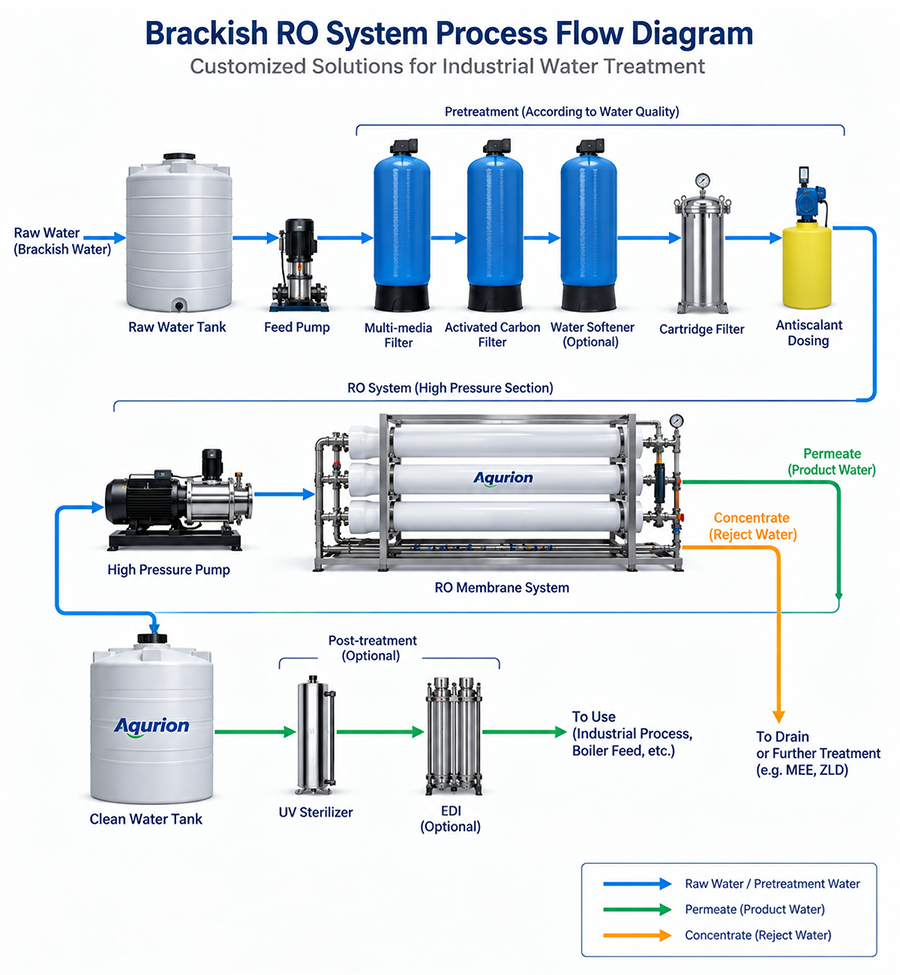
A brackish water RO system is more than a membrane rack. Pretreatment, pumps, membranes, vessels, instrumentation, controls and post-treatment must work together under the operating conditions defined during engineering.

Remove sand/silt/organics to reduce membrane fouling risk.

Ion exchange or antiscalant dosing to mitigate hardness and scaling.

Final polishing (often 1–5 μm) before RO membranes to protect pressure vessels and elements.

Ultrafiltration can be added for high turbidity, colloids, or microbiological load to stabilize RO operation.

Optional pH adjustment or remineralization (calcite filters) to stabilize permeate water, prevent corrosion in downstream piping.
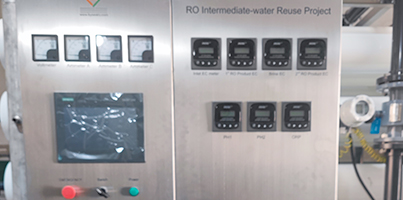
Flow/pressure monitoring, conductivity, safety interlocks, and automated sequences—designed for industrial duty cycles.
The starting point is the feed water, followed by the required product-water quality. Two systems with the same nominal capacity can require very different pretreatment, membrane and operating configurations.
At Aqurion, we believe a reliable RO system depends on more than membrane brand or rated capacity. We engineer the mechanical, electrical and hydraulic components to work together according to the actual feed water conditions and project requirements.
Our team focuses on process design, component selection, piping layout, maintenance access, instrumentation, control logic and membrane cleaning requirements. Before shipment, we can carry out applicable piping, electrical, control and functional checks based on the supplied system and agreed project scope.
For projects integrated into a larger water treatment plant, Aqurion also works with customers to define feed requirements, connection points, concentrate discharge, permeate routing and electrical interfaces in advance. This helps simplify installation and reduces unnecessary adjustments at the project site.
Brackish water treatment is used when the dissolved mineral concentration of the source water makes it unsuitable for its intended process or water quality requirement. RO provides a pressure-driven separation step that can reduce dissolved salts and a broad range of other dissolved substances. EPA identifies reverse osmosis as a membrane process used for removing salts from brackish or seawater as well as many dissolved solids and inorganic contaminants.
In a properly designed system, the treatment objective is not simply to produce the lowest possible TDS. Engineers first determine the required product-water quality and then select the treatment process around the feed conditions and downstream use.
Typical objectives can include:
The correct configuration depends on feed analysis, capacity, operating schedule, required water purity and the treatment stages installed before and after the membrane system.
RO works by applying pressure to feed water so that part of the water passes through a semipermeable reverse osmosis membrane. The membrane separates the flow into permeate, which contains a lower concentration of dissolved salts, and concentrate, which carries rejected salts and other substances away from the membrane surface.
This crossflow arrangement is different from conventional water filtration that simply traps particles in a filter medium. The membrane continuously receives feed water while permeate and concentrate leave through separate flow paths.
A typical water treatment process may include:
Membrane performance is influenced by factors including salt concentration, temperature, pH, recovery and fouling conditions, so the operating design should reflect the real feed stream.
Brackish reverse osmosis systems are used where freshwater quality is insufficient for the intended process but full seawater desalination is not the appropriate treatment route.
For industrial water treatment, RO may be used to reduce dissolved solids before boilers, process lines, rinsing systems or additional polishing equipment. In these applications, the important question is how the treated water interacts with the downstream process rather than simply whether the unit can generate purified water.
For municipal or commercial water purification, brackish groundwater can be treated where the raw water contains excessive dissolved salts. Potable drinking water projects may also require disinfection, remineralization and compliance with applicable local water-quality requirements after membrane treatment.
Other water applications can include food and beverage processing, water bottling, utility-water preparation and selected wastewater-reuse projects. RO is also widely used as a pretreatment stage ahead of ion exchange or higher-purity treatment where the objective is to reduce the ionic load entering the next process.
RO membrane systems should be operated as treatment processes, not treated as fixed-output pumps. Feed-water changes can influence permeate flow, water quality, pressure and cleaning requirements.
Three factors deserve particular attention.
Pretreatment: Suspended matter, scaling compounds, organics and biological activity can affect the membrane. Pretreatment should match the actual feed-water risks.
Recovery: Increasing water recovery reduces the concentrate volume, but it also increases dissolved-solids concentration inside the membrane system. The appropriate recovery target must therefore be evaluated against feed chemistry and scaling potential.
Performance monitoring: Operators should monitor relevant flow, pressure and water-quality indicators so that gradual changes can be distinguished from normal variations caused by temperature or feed composition.
Regular inspection, cartridge replacement where applicable, chemical adjustment, flushing and membrane cleaning should follow the system design and membrane supplier’s operating guidance rather than a universal maintenance interval.
A useful quotation should be based on the treatment duty, not only a requested machine size. Providing the following information helps engineers define a suitable RO system and identify any pretreatment or post-treatment requirements:
Where the water analysis is incomplete, available test data should be supplied first so that missing information can be identified before final system selection.
The primary difference is the feed-water salinity and the resulting system design. Brackish water contains more dissolved solids than freshwater but less than seawater. Because osmotic pressure increases with salinity, membrane selection and required operating pressure differ between brackish and sea water treatment. The final design should always be based on actual feed analysis rather than the source name alone.
Yes. Brackish well water is a common application for membrane desalination. However, groundwater may also contain hardness, iron, manganese, silica or other constituents that affect pretreatment and membrane operation. A water analysis is needed before determining the correct brackish water treatment process.
RO membranes are selected according to feed composition, required permeate quality, operating conditions, recovery objective and system design. There is no single membrane that should automatically be used for every brackish water source. The membrane should be evaluated as part of the complete system rather than as an isolated component.
No. Pretreatment depends on the source water and membrane risks. One site may require relatively simple water filtration, while another may require additional control of hardness, suspended matter, oxidants, organics or scaling compounds. Feed-water analysis should determine the pretreatment process.
Water recovery depends on feed-water chemistry, scaling potential, membrane configuration, required water quality and operating strategy. A higher recovery target is not automatically a better design because concentrating salts too aggressively can increase scaling risk and affect long-term system performance.
RO can reduce dissolved salts from brackish water and is used in drinking-water treatment, but potable water projects must be evaluated as complete treatment systems. Depending on the source and local requirements, additional pretreatment, disinfection, remineralization, storage or post-treatment may be necessary.
Provide your water analysis, source-water type, required capacity, target product-water quality, operating schedule, power supply and installation conditions. Details about existing pretreatment, available footprint, automation requirements and the final use of the treated water will help define a more appropriate system configuration.
Discuss Your Brackish Water Treatment Project
Send us your feed-water analysis, required treated-water capacity, target water quality and installation conditions. We can use this information to evaluate the treatment process, membrane configuration, pretreatment requirements and equipment arrangement before preparing a system proposal and quotation.