Talk To Our Engineer Now
Before you go, our engineers can review your water quality, process needs, and budget to suggest the right system - share a few details now and get expert feedback
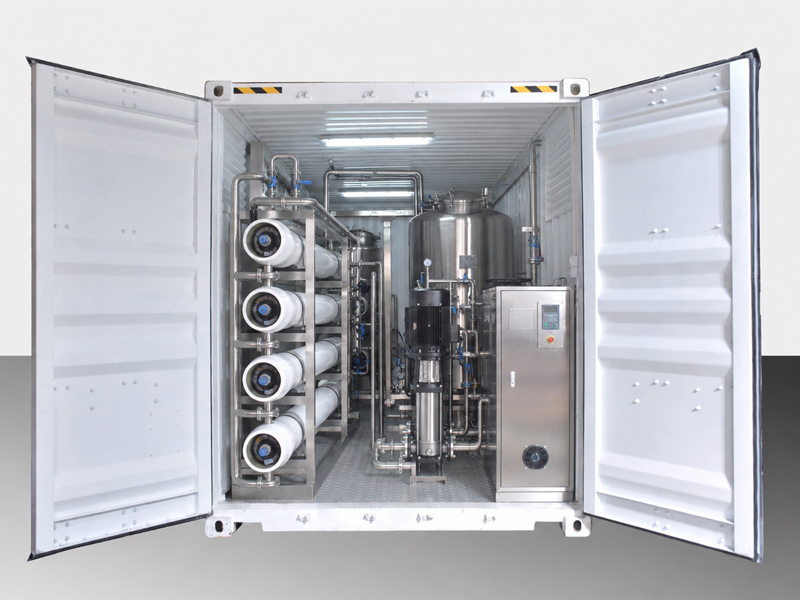
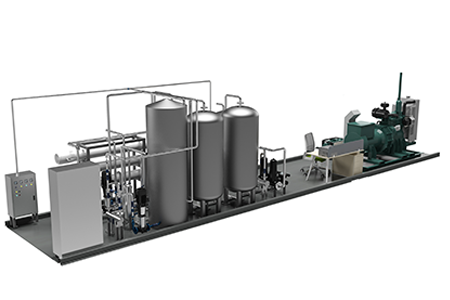
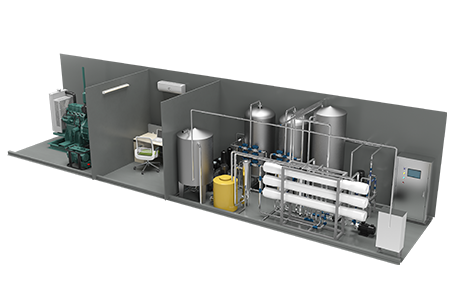
| Item | Typical Range / Options | Notes |
| Capacity | ~2–7,500 m³/day (customizable) | From small camps to large industrial/municipal installations |
| Container Size | 10 ft / 20 ft / 40 ft | shipping containers for global transport |
| System Type | BWRO / SWRO / RO + pretreatment + post-treatment | Select membranes, pumps, and materials based on water chemistry |
| Controls | PLC/HMI (optional SCADA/telemetry) | Remote monitoring can reduce onsite staffing |
| Optional Fit-out | Insulation, lighting, air conditioning, door-in-door, emergency shower, custom exterior | Configured for hot/cold climates and site requirements |
| Project Value | Reduced construction time and downtime vs. traditional builds | Turnkey packaging can significantly shorten schedules and simplify approvals |
If you are planning a containerized RO or mobile reverse osmosis project, provide the operating information available at the current project stage. Our engineering team can use that information to evaluate the treatment process and identify the configuration that should be developed further.
Useful inquiry information includes:
With this information, the proposed containerized water treatment package can be evaluated around actual project conditions rather than assumptions. The objective is to define a practical treatment process, container layout and equipment scope before manufacturing begins.
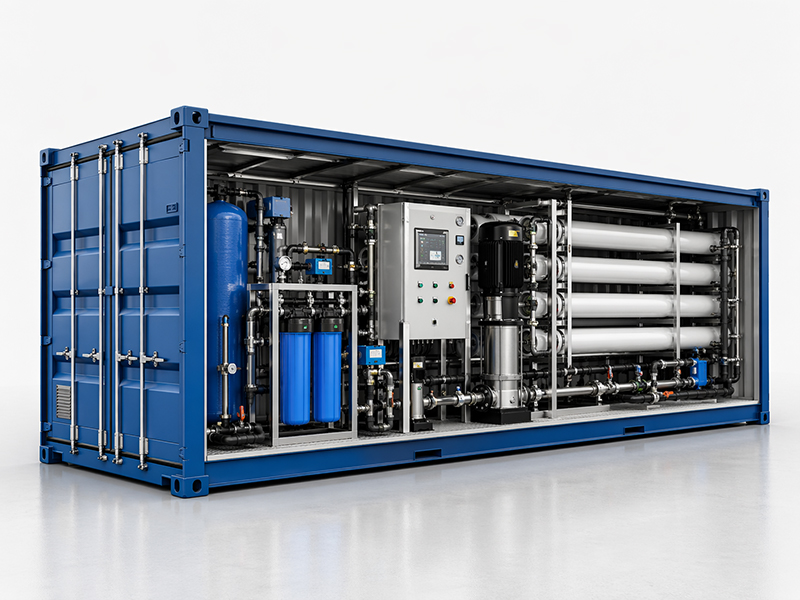
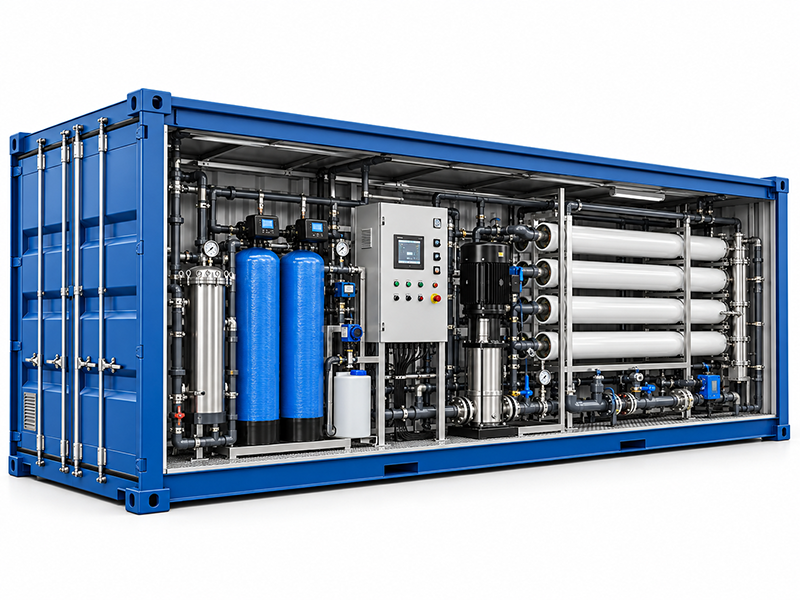
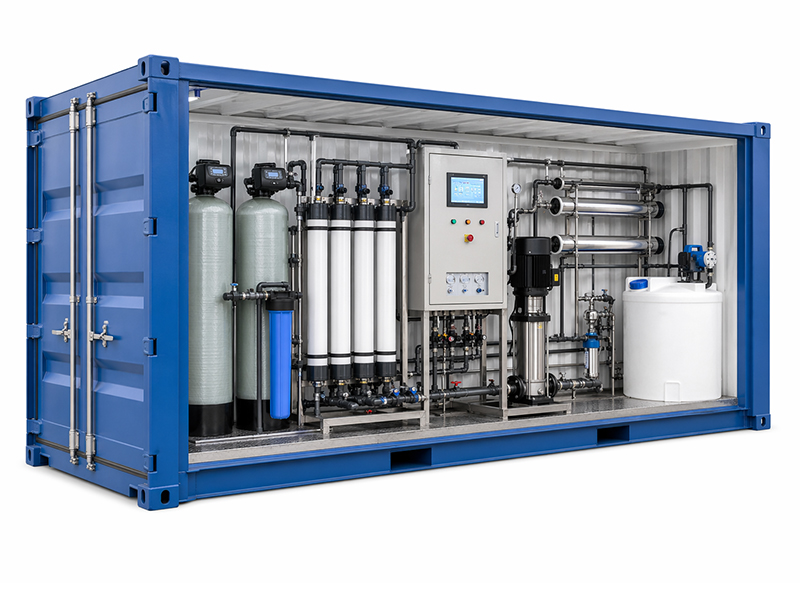
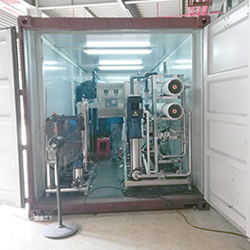
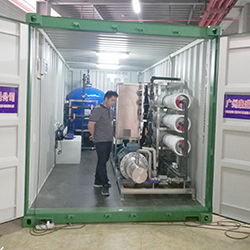
A containerized RO system is a water treatment system installed within or integrated into a shipping container so that major process equipment can be transported as one coordinated package.
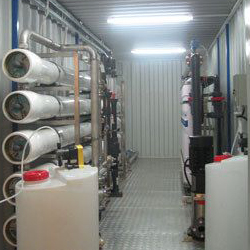
Depending on the project, the containerized system may include feed pumping, pre-filtration, chemical dosing, cartridge filtration, membrane pressure vessels, high-pressure pumping, instrumentation, a control panel, valves and associated piping. Post-treatment can also be added when the required product water specification calls for additional conditioning.
The result is a more centralized equipment arrangement than a field-built reverse osmosis plant. It can reduce field piping and wiring while providing physical protection for the process equipment. A containerized layout can also improve coordination between treatment equipment, electrical interfaces and site connection points.
Containerization should not be confused with a completely installation-free turnkey system. Foundations, feed connections, product water connections, concentrate discharge, electrical supply and commissioning work may still be required at site.
Different containerized reverse osmosis system configurations can be engineered for different source waters and treatment objectives. A system intended for brackish groundwater may require a different membrane arrangement, operating condition and pre-treatment process from a system designed for seawater desalination, municipal supply or industrial process water.
Configurations can therefore be selected according to feed water analysis, required product water quality, water production demand, operating hours, available power, site conditions and downstream use. Systems may incorporate different levels of automation, filtration, chemical treatment, monitoring and post-treatment depending on project requirements.
This allows individual RO solutions to be presented according to the actual project rather than forcing every application into one standard equipment specification.
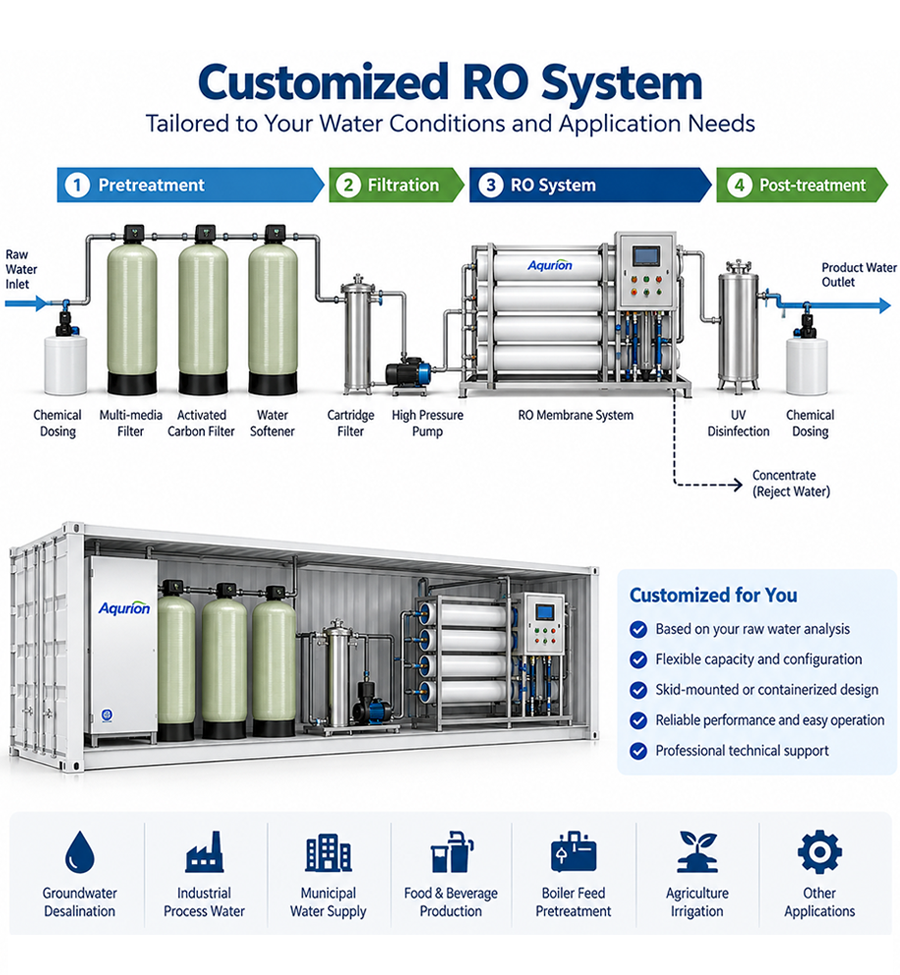
A typical treatment sequence can be represented as:
Feed Water → Pre-Treatment → Cartridge / Fine Filtration → RO Membrane System → Product Water
The exact sequence depends on the incoming water. Pre-treatment prepares the feedwater for the membrane process and may address suspended solids, scaling potential, organic contamination or other conditions that could interfere with operation. Fine filtration provides another protective barrier before water enters the membrane section.
Pressure then drives water through the RO membranes. Lower-salinity permeate passes through the membrane while a concentrate stream carries retained dissolved material away from the membrane system. Reverse osmosis plants therefore normally have both permeate and concentrate outlets.
Depending on the final water quality requirement, additional treatment can follow RO. Potable applications, industrial process water or specialized manufacturing processes may each require different post-treatment.
Containerized RO can be engineered around several water supplies, but the same RO unit should not be assumed suitable for every source.
Possible feed sources include brackish water, brackish groundwater, municipal water, surface water, seawater and selected industrial water streams. Each source presents different treatment challenges.
Brackish groundwater, for example, may contain dissolved minerals with scaling potential. Surface water can require greater attention to suspended solids, organics and biological fouling. Seawater has much higher salinity and therefore requires a substantially different membrane and pressure design from conventional brackish reverse osmosis. DuPont’s RO guidance likewise treats municipal, well, surface, seawater and wastewater as distinct feed-water categories when defining membrane design guidelines.
The membrane type, pre-treatment, operating pressure, recovery rate, chemical dosing and membrane protection strategy should therefore be determined from actual source-water conditions rather than selected from a generic specification.
The main value of containerized water treatment is project integration. Major equipment can be assembled within a controlled factory environment before delivery, helping reduce the amount of mechanical and electrical integration required at the final site.
A containerized package can provide several practical advantages: equipment can be pre-assembled, piping and controls can be centralized, the overall footprint can be easier to plan, and the equipment receives additional protection during transportation and operation. The package can also be transportable where relocation is part of the project concept.
For remote industrial sites, temporary facilities, infrastructure projects or locations with limited plant-room space, this compact design can simplify coordination between equipment suppliers and site contractors.
A standard shipping container or other suitable enclosure may be selected according to the equipment layout. A 40-foot configuration may be appropriate for some projects, but container selection should follow equipment dimensions, service access and capacity requirements rather than being treated as a fixed specification. Commercial containerized systems are commonly offered in standard shipping containers, while actual internal configuration varies by project.
A containerized water purification system is most useful when both treatment performance and deployment logistics matter.
Industrial applications can include process water preparation, utility water, mining operations, power facilities and remote production sites. A containerized water treatment plant may also support construction or infrastructure projects where a permanent treatment building is not practical during early project stages.
For drinking water projects, the treatment train can be designed to produce water for further potable treatment or distribution where the overall project and local requirements support that application. RO technology is widely used for desalination of both seawater and brackish sources and for industrial process-water treatment.
Mobile reverse osmosis concepts are also relevant to temporary water supply, disaster relief, community projects and locations where equipment may need to be moved after the original project ends.
For desalination, the package may form part of a broader desalination plant, including intake treatment, pre-treatment, RO, post-treatment and product-water handling. Seawater applications should be engineered specifically for seawater conditions rather than treated as a standard industrial RO package.
A custom engineered system begins with the operating conditions the equipment will actually encounter.
Engineering normally considers source-water chemistry, salinity or TDS, suspended solids, temperature and other relevant water characteristics. The required water production and desired purified water specification then influence the membrane arrangement, pumping, treatment stages and operating strategy.
The engineering team should also understand operating hours, electrical supply, installation environment, automation requirements, chemical availability, upstream treatment and downstream storage or processing.
For that reason, buyers should provide a recent water analysis whenever possible. The required flow should also be stated clearly, whether in m³/h, m³/day or GPM, together with the desired permeate specification.
RO design guidance emphasizes that membrane performance depends on feed-water analysis, temperature, pressure, recovery and membrane selection, and that brackish and seawater applications have materially different design constraints.
The final package can then be made to order around real operating requirements instead of relying on assumptions about the project.
The necessary components depend on the source water and project scope.
A containerized industrial reverse osmosis system may include pre-treatment equipment, fine or cartridge filtration, chemical dosing equipment where required, membrane pressure vessels, pumps, piping, instrumentation, control equipment and product/concentrate connections.
A control system may supervise operating sequences, pressure conditions, water production and selected alarms. Some projects may request a more highly or fully automated arrangement, while others require simpler controls that can be integrated into the site’s existing automation architecture.
Instrumentation should also be selected according to what must be monitored during operation rather than simply maximizing the number of sensors.
Maintenance access is equally important. Membrane removal, cartridge replacement, pump servicing, valve operation and instrument calibration should be considered during the container layout so that the equipment remains serviceable after installation.
Depending on project scope, a containerized system can be engineered, assembled, piped, wired and inspected before shipment.
Factory preparation may include piping inspection, electrical checks, control verification, instrumentation checks, leak inspection and functional testing of pumps and valve operation. The exact test procedure should match the equipment supplied and the agreed project scope.
Factory integration is particularly valuable because issues involving pipe routing, cable connections, component access or control logic can be identified before the equipment arrives at site.
A system described as tested before shipment should still undergo appropriate site installation and commissioning. Transportation, incoming utilities, site piping and external equipment can all affect final operation, so factory testing and field commissioning should be treated as complementary stages rather than substitutes for one another.
Engineers and procurement teams should evaluate more than headline capacity. The proposed treatment process should match the actual feed water, required permeate specification and operating conditions.
Review the pre-treatment concept, membrane selection, proposed controls, maintenance accessibility, concentrate handling and integration with upstream and downstream equipment. Confirm what is physically included inside the shipping container and what must be supplied at site.
Documentation is another important purchasing consideration. Depending on the project, useful documentation may cover process flow, equipment arrangement, connection requirements, operating instructions, electrical information, spare parts and commissioning procedures.
Buyers should also determine what supplier engineering support is available before production and during commissioning. A pre-engineered platform may shorten the engineering process for repeatable applications, while complex or large-scale industrial projects often require more project-specific design work.
The objective should be to select a technically appropriate water solution, not simply the container with the largest stated capacity.
A containerized RO system is a reverse osmosis treatment package installed within or integrated into a transportable container. It can combine pre-treatment, membranes, pumping, controls and associated piping in one coordinated arrangement. The exact scope varies by application, water source and required product-water quality.
Yes, a system can be engineered for seawater, but a seawater RO design is different from a conventional brackish or municipal-water system. Higher salinity affects membrane selection, pressure requirements, energy considerations, recovery and pre-treatment. Seawater characteristics must therefore be considered specifically during RO design.
The most useful information is the feed-water source and analysis, required water production, target product-water quality, operating hours, electrical supply, installation conditions and project application. Details about upstream treatment, storage and downstream processes also help define the correct equipment interfaces.
The contents depend on project scope. A system may contain pumps, pre-filtration, cartridge filters, membrane pressure vessels, instruments, piping, valves, control equipment and chemical dosing systems. Additional pre-treatment or post-treatment equipment may be installed inside the same enclosure or supplied separately when space, maintenance access or process requirements make that arrangement more practical.
The container is normally positioned on a suitable prepared foundation and connected to the required water, concentrate, product-water, drainage and electrical interfaces. External tanks or treatment equipment may also require connection. Although containerization can reduce field assembly and installation time, appropriate site commissioning is still required before routine operation.
Recovery depends on feed-water chemistry, membrane configuration, scaling and fouling limits, operating conditions and the treatment objective. It should not be selected as a fixed percentage without evaluating the water. Membrane manufacturers specifically recommend considering feed-water characteristics and system operating conditions when determining RO design limits.
Yes. Mobile reverse osmosis systems can be configured around different feed sources, water-production requirements, product-water specifications, automation levels and site conditions. Depending on the application, the package may form part of a temporary supply system, industrial project, desalination installation or longer-term sustainable water treatment solution.