Talk To Our Engineer Now
Before you go, our engineers can review your water quality, process needs, and budget to suggest the right system - share a few details now and get expert feedback


Send feedwater TDS, flow (m³/h or GPD), target permeate quality, and power supply details..
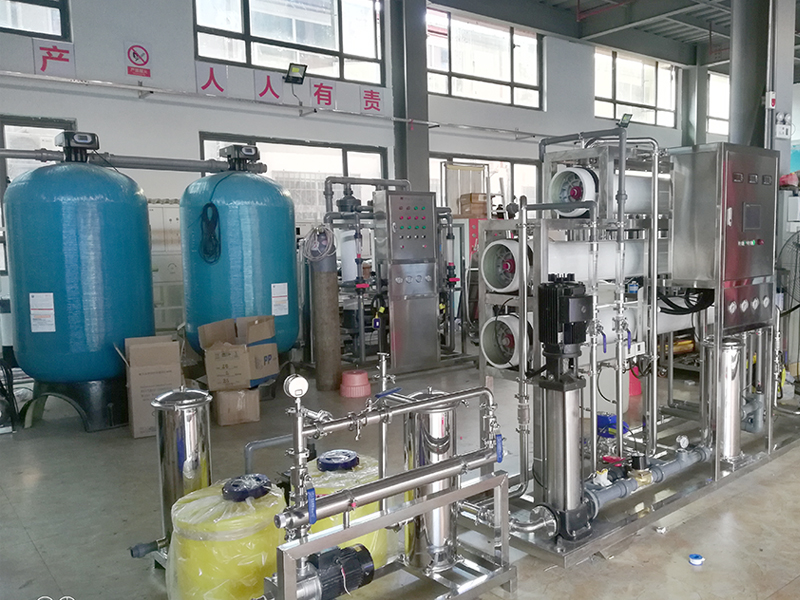
Raw water enters from a municipal supply, borehole, surface-water plant, or previously treated industrial water source.
Sediment, hardness, chlorine, turbidity, organics, metals, or biological loading are controlled as required.
A sediment filter or fine cartridge filter helps protect downstream pumps and membrane elements.
A booster pump may stabilize the inlet, while a high-pressure pump provides the pressure required for membrane separation.
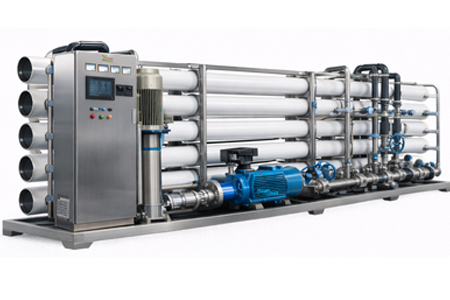
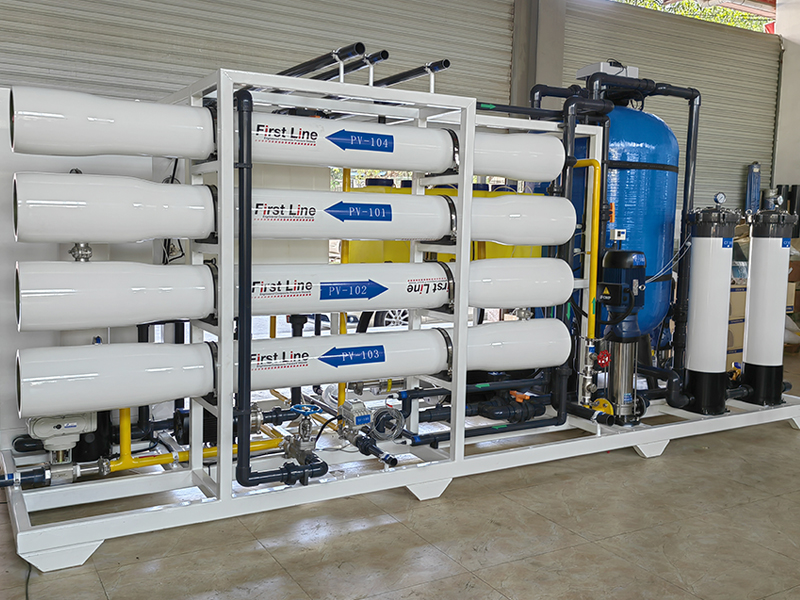
eedwater enters the pressure vessel and flows across the RO membrane. Part becomes permeate, while the remaining concentrate carries rejected salts away.
Depending on the application, post-treatment may include pH correction, remineralization, UV, polishing, degassing, ion exchange, or EDI.
| Parameter | Typical Specification |
| Feedwater Source | Municipal water, groundwater, surface water, brackish water, seawater or pretreated industrial wastewater |
| Product Water Capacity | 10–2,000 m³/day or customized |
| Product Water Flow | Customized according to hourly and daily demand |
| Feedwater TDS | Up to 10,000 mg/L for standard brackish-water configurations; higher TDS requires specialized design |
| Product Water TDS | Determined by feedwater quality, membrane selection, and required water standard |
| Salt Rejection | Typically 97–99.5%, depending on membrane type and operating conditions |
| Recovery Rate | Typically 50–85%; confirmed through feedwater and scaling analysis |
| Operating Pressure | Approximately 8–30 bar for typical brackish-water applications |
| Feedwater Temperature | Typically 5–40°C |
| Feedwater pH | Confirmed according to membrane and pretreatment requirements |
| RO Membrane Size | 4-inch or 8-inch membrane elements |
| Membrane Configuration | Single-pass, double-pass, single-stage, or multi-stage |
| Pressure Vessel | FRP or stainless steel, selected according to operating pressure |
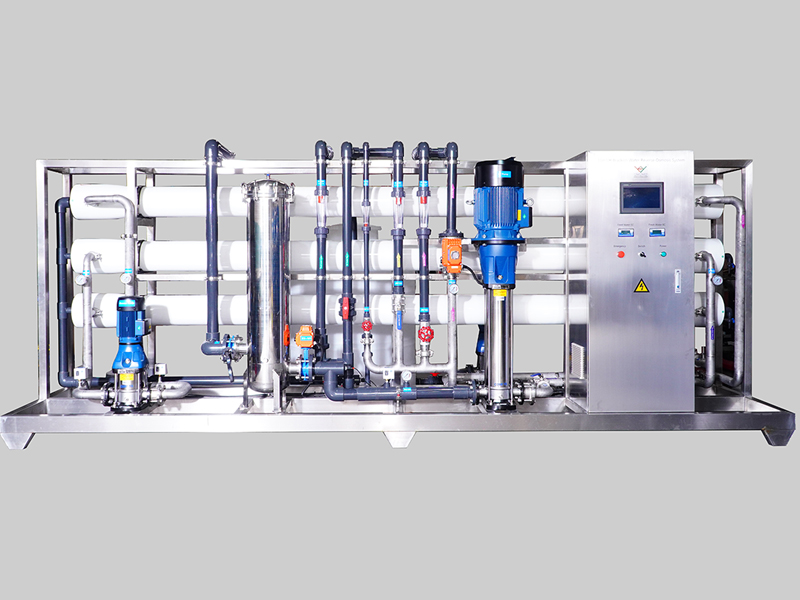
| High-Pressure Pump | Stainless steel centrifugal pump with optional VFD |
| Pretreatment | Multimedia filter, activated carbon, softener, ultrafiltration, chemical dosing, and cartridge filtration as required |
| Cartridge Filter | Typically 1–5 μm |
| Control System | Microprocessor or PLC with optional touchscreen HMI |
| Monitoring Instruments | Pressure gauges, flow meters, conductivity meter, pressure switches, and level controls |
| Frame Material | Powder-coated carbon steel or stainless steel |
| High-Pressure Piping | Stainless steel or pressure-rated engineered piping |
| Low-Pressure Piping | UPVC, CPVC, stainless steel, or project-specific material |
| Electrical Supply | 380–415 V, 50/60 Hz, three-phase, or customized |
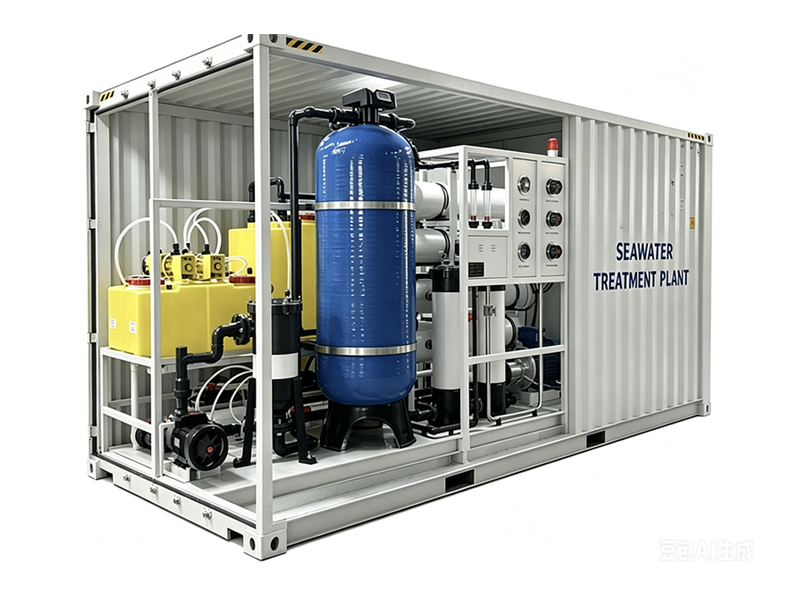
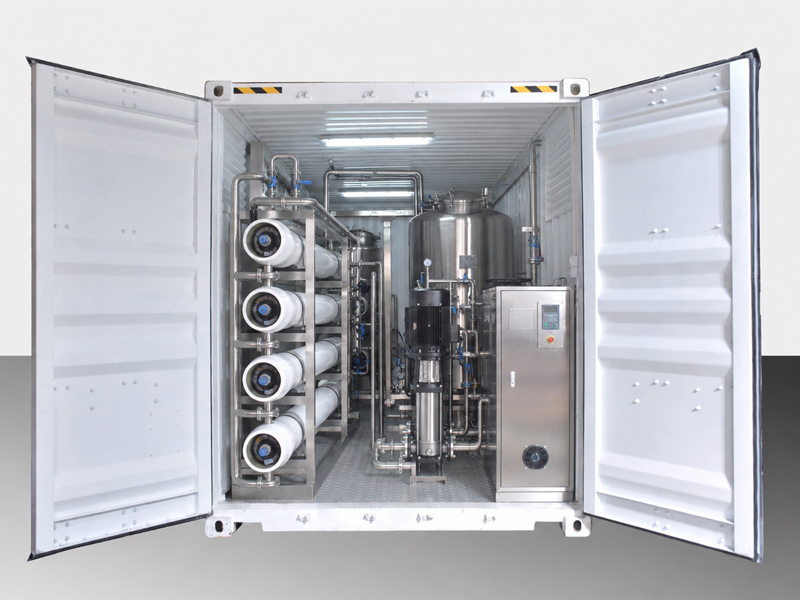
| Installation Format | Skid-mounted, modular, or containerized |
| Cleaning System | Manual or automatic membrane flushing; optional CIP system |
| Optional Post-Treatment | UV, EDI, ion exchange, pH adjustment, remineralization, or disinfection |
| Automation Options | Automatic flushing, tank-level control, dosing interlocks, alarms, data logging, and remote-monitoring readiness |
| Application | Process water, boiler feedwater, cooling-tower makeup, food and beverage, electronics, pharmaceutical pretreatment, and water reuse |
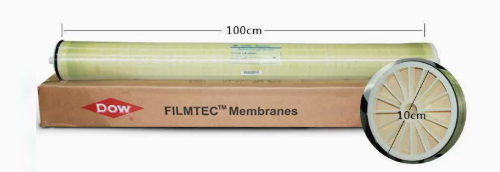
Membrane Elements
Selected for salinity, salt rejection, pressure, cleaning compatibility and product water target.
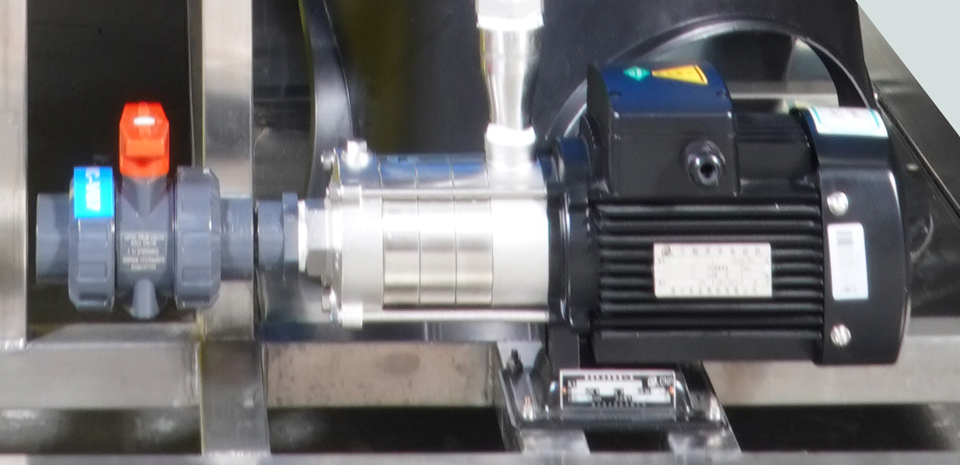
Pumps
High-pressure and booster pumps should operate near the required hydraulic duty point.
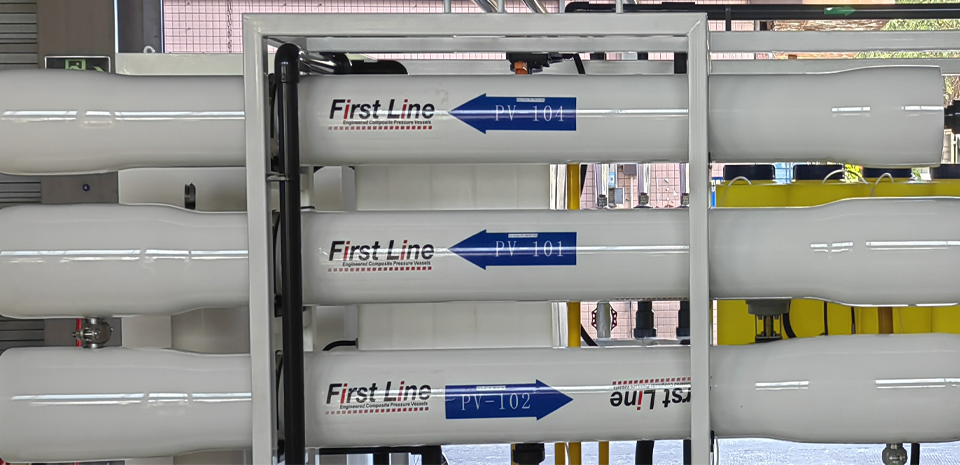
Pressure Vessels
Matched to membrane size, element quantity, pressure rating and array configuration.
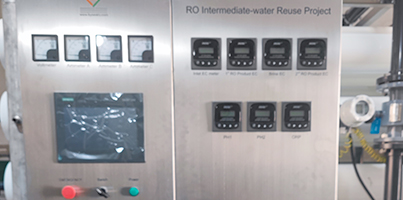
Controls
Conductivity, flow, pressure, level, alarms and flushing can be automated by PLC or microprocessor.
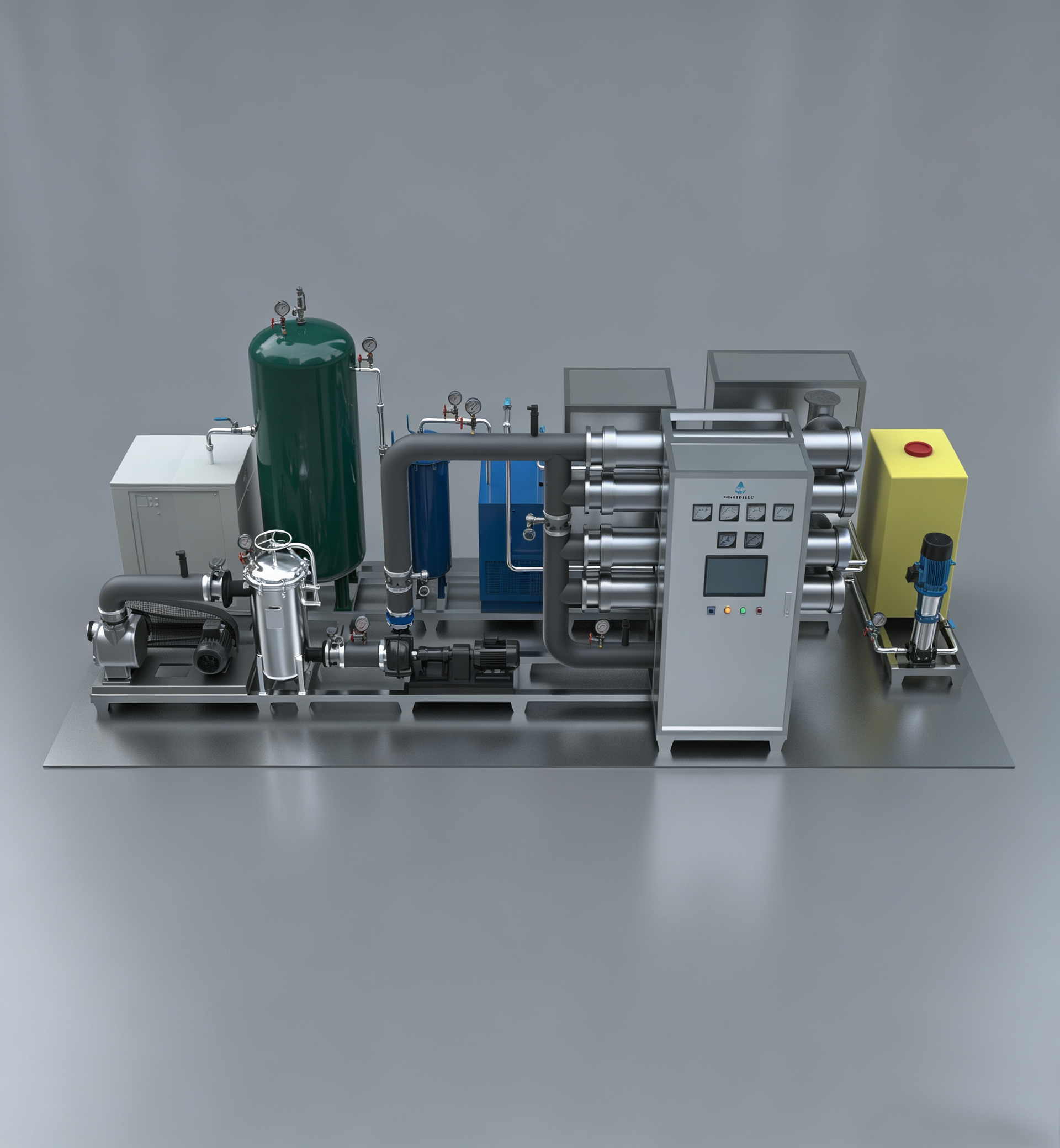
Pretreatment, membrane selection, recovery and pressure are reviewed against the available analysis.
Pumps, membranes, vessels, instruments, controls and materials can be defined in the proposal.
Equipment can be assembled and checked before shipment according to the confirmed scope.
Available documents may include drawings, specifications, guidance and component lists.
Layouts, interfaces, branding and equipment configurations can be adapted for partners.
Recommended consumables and critical spares can be identified during project review.
Aqurion supports customers throughout the project, from initial water analysis and process design to equipment manufacturing, factory testing and delivery. Our systems can be supplied as skid-mounted, modular or containerized RO units to suit different installation requirements.
Our supply can include pretreatment equipment, RO skids, pumps, membrane pressure vessels, dosing systems, CIP systems, instrumentation, PLC controls, piping and post-treatment equipment. We also provide technical drawings, operating documentation, installation guidance and after-sales support to help customers complete their industrial water treatment projects.
Aqurion industrial reverse osmosis system uses pressure and semipermeable membranes to reduce dissolved salts, minerals, and other contaminants. Water passing through the membrane becomes permeate or product water, while the concentrate stream carries rejected substances away.
Industrial RO systems are used for process water, boiler feedwater, cooling-tower makeup, ingredient water, manufacturing, and downstream polishing. The system is suitable when its pretreatment, capacity, recovery rate, pressure, and automation are engineered around the feedwater analysis and required product water quality.
Unlike residential or light commercial units, industrial RO capacity must account for hourly demand, operating time, water temperature, salinity, inlet pressure, and membrane condition. Published GPD or GPM ratings should therefore not be treated as guaranteed output under every site condition.
Membrane protection starts with stable feedwater conditions and effective pretreatment. Operators should monitor inlet and outlet pressures, permeate conductivity, concentrate flow, normalized production, pressure drop, chemical dosing, and cartridge-filter condition.
A membrane can foul because of suspended matter, organics, biological activity, or metal deposits. It can also lose performance due to mineral scaling, chemical exposure, oxidation, compaction, or unsuitable operating conditions. Trending operating data helps distinguish normal changes caused by temperature from actual performance decline.
Routine work may include cartridge replacement, instrument checks, dosing-system inspection, leak checks, flushing, performance review, and periodic cleaning. A statement such as membrane service “every 6-12 months” should be treated only as an example, not a universal schedule. Cleaning and replacement depend on feedwater quality, operating hours, pretreatment effectiveness, membrane condition, chemical compatibility, and manufacturer recommendations.
The correct arrangement depends on the feedwater analysis and the limits of the selected membrane. No single configuration is suitable for every municipal, borehole, surface, seawater or reused-water source.
Suspended solids, chlorine, hardness, silica, iron, manganese, organics, turbidity and biological activity can each create a different operating risk.
High-flux membranes and energy recovery (for SWRO) reduce power draw. When you pair correct pretreatment with sensible recovery targets, you also cut chemical use and disposal cost over the system’s life.
Modular skids make capacity expansion straightforward. Containerized units support fast “add-on” supply when demand spikes or when a remote site needs water yesterday—not next quarter.
High-rejection membranes deliver ultra-pure permeate. Automated controls monitor key signals (pressure, conductivity, flow) to keep recovery stable and flag maintenance before performance drops.
Industrial-duty build quality with documented testing helps meet project requirements and supports consistent output. If you need add-ons like UV, EDI, or specific chemical dosing, we design them as part of the complete process train.
Begin with hourly demand, daily consumption, operating hours, peak usage, and available product-water storage. Then adjust the required nominal capacity for feedwater temperature, salinity, pressure, recovery, and expected membrane performance. Selecting solely from a published GPD number can result in insufficient production or unnecessary equipment cost.
A useful analysis normally includes TDS or conductivity, pH, hardness, alkalinity, chloride, sulfate, silica, iron, manganese, turbidity, suspended solids, and relevant organics or microbiological indicators. The exact testing scope depends on the source water and application. Source variability should also be considered when one sample may not represent seasonal conditions.
Some form of protection is usually required, but the arrangement varies. Relatively stable municipal water may need different treatment from borehole or surface water. Chlorine, sediment, hardness, metals, organics, and biological activity should be assessed before selecting filtration, activated carbon, softening, antiscalant, ultrafiltration, or chemical dosing.
SWRO handles higher salinity and needs higher pressure (typically 55–80 bar). BWRO targets moderate salinity and usually runs at lower pressure (15–25 bar), which often lowers energy and maintenance requirements. Feedwater drives the design.
They can. Many container packages integrate core pretreatment, RO skids, pumps, and controls in one unit for quick deployment. The exact pretreatment depends on feedwater quality—remote sources can vary wildly, so we match filtration and dosing to the risk.
RO may be part of a potable-water treatment system, but the RO unit alone does not guarantee compliance. Source-water risks, disinfection, storage, post-treatment, distribution hygiene, laboratory testing, and local regulations must be addressed. The finished water should be verified against the applicable drinking-water standards before human consumption.
Yes, provided the hydraulic, electrical, control, and water-quality interfaces are reviewed. Integration may require modifications to tanks, pumps, piping, pretreatment, dosing, instrumentation, or control logic. Existing upstream and downstream equipment should be evaluated before the final configuration is approved.