Talk To Our Engineer Now
Before you go, our engineers can review your water quality, process needs, and budget to suggest the right system - share a few details now and get expert feedback

Problem / Solution Fit
Cooling tower treatment is not only a chemical program. It is a complete water-quality strategy that helps operators maintain heat transfer, reduce cleaning frequency and improve system stability.
The most reliable cooling tower water treatment systems combine mechanical filtration, makeup-water conditioning, chemical dosing compatibility and routine monitoring. The exact configuration depends on feedwater quality, tower tonnage, recirculation rate, metallurgy, heat load and discharge limits.
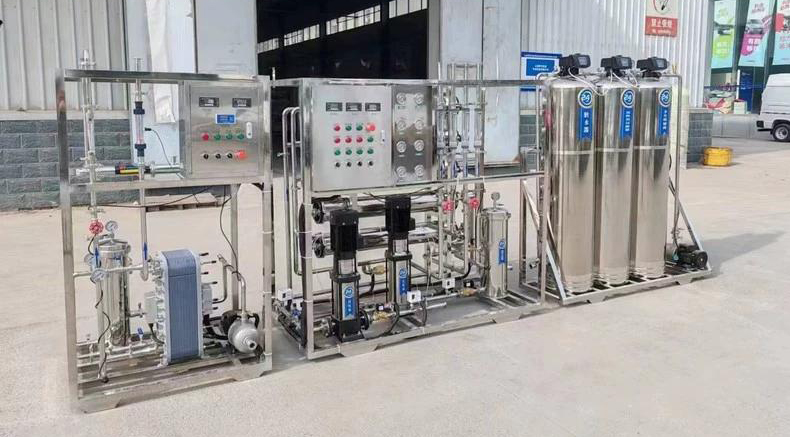
A simplified process view for landing-page visualization.
Product Modules
Comparison
A quick website-friendly comparison table for engineers, facility managers and procurement teams.
| Treatment Path | Best Use | Controls | Advantages | Does not remove dissolved salts or replace disinfection |
| Side-stream Filtration | Dirty basins, solids loading, dusty locations | Suspended solids, silt, debris, fouling support | Lower cleaning load, better heat-transfer stability, compact retrofit | Downtime must be managed. |
| Softening | Hard makeup water and scale-sensitive systems | Calcium and magnesium hardness | Reduces scale potential and protects downstream equipment | Requires salt/regeneration or alternative design consideration |
| UF / RO Pretreatment | Reuse water, high TDS, difficult raw water | Particles, colloids, dissolved solids depending on process | Improves makeup-water quality and supports higher system stability | Requires pretreatment, membrane care and reject-water planning |
| RO + EDI / Mixed-Bed DI | Adjacent high-purity utility water for semiconductor, pharma, labs | Residual ions and polishing-duty contaminants | Supports high-purity water generation beyond standard cooling treatment | Not normally required for the entire cooling tower loop |
Industries
Tailor each industry card to internal case studies, product photos or downloadable engineering notes.
Reduce heat-exchanger fouling, unstable blowdown and unplanned cleaning for chemical, mining, electronics and general manufacturing sites.
Support cooling utility reliability while cross-linking to UPW-related RO+EDI and polishing systems for high-purity process areas.
Combine cooling water control with adjacent high-purity water generation for validated utilities, laboratory water and DI polishing needs.
ontrol scale, corrosion and solids loading in high-flow cooling systems using filtration, softening, RO and monitoring-ready designs.
Best Practices Guide