Before you go, our engineers can review your water quality, process needs, and budget to suggest the right system - share a few details now and get expert feedback
Get The Quote In 60 Minutes
Share your water quality and project requirements today to receive a tailored industrial water treatment system from our engineer team within 1 hour.
Engineered for commercial and industrial water applications, our reverse osmosis systems are configured around your feedwater analysis, required product water quality, operating schedule, and installation conditions. From skid-mounted treatment equipment to integrated RO solutions, each system is designed to balance reliable output, membrane protection, practical recovery targets, and straightforward operation.
What Is an Industrial Reverse Osmosis System, and Is It Right for Your Project?
An industrial reverse osmosis system uses pressure and semipermeable membranes to reduce dissolved salts, minerals, and other contaminants. Water passing through the membrane becomes permeate or product water, while the concentrate stream carries rejected substances away.
Industrial RO systems are used for process water, boiler feedwater, cooling-tower makeup, ingredient water, manufacturing, and downstream polishing. The system is suitable when its pretreatment, capacity, recovery rate, pressure, and automation are engineered around the feedwater analysis and required product water quality.
Unlike residential or light commercial units, industrial RO capacity must account for hourly demand, operating time, water temperature, salinity, inlet pressure, and membrane condition. Published GPD or GPM ratings should therefore not be treated as guaranteed output under every site condition.
Explore Industrial Reverse Osmosis Systems for Different Capacity Requirements
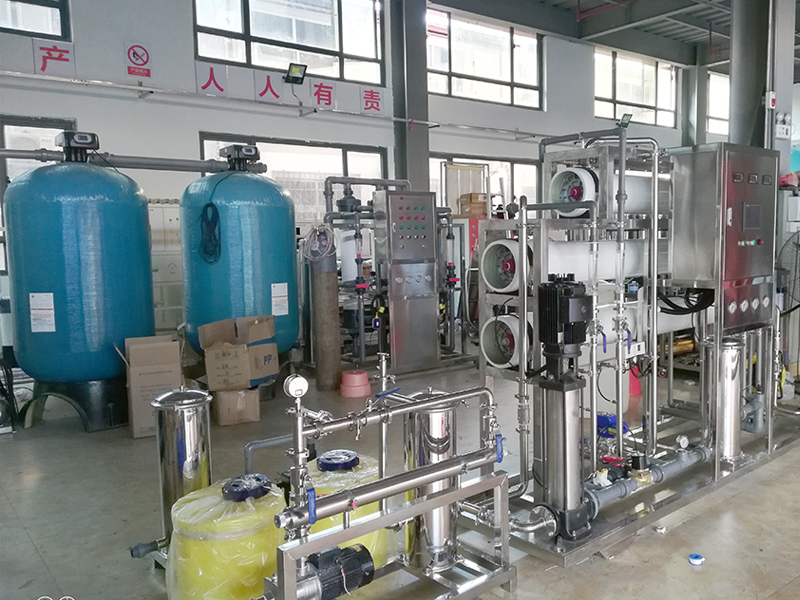
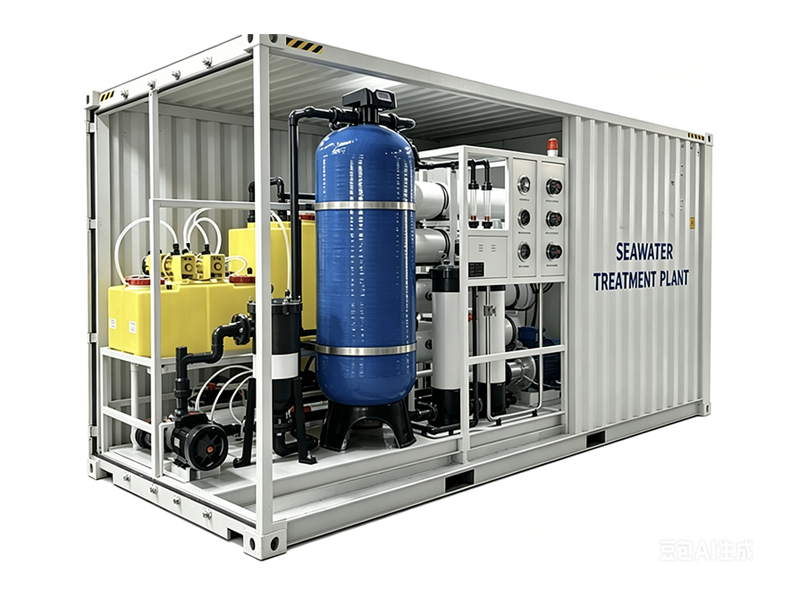
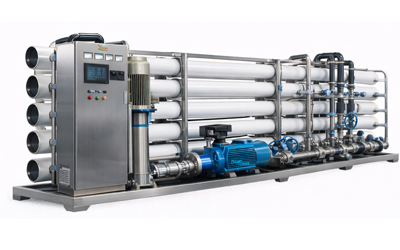
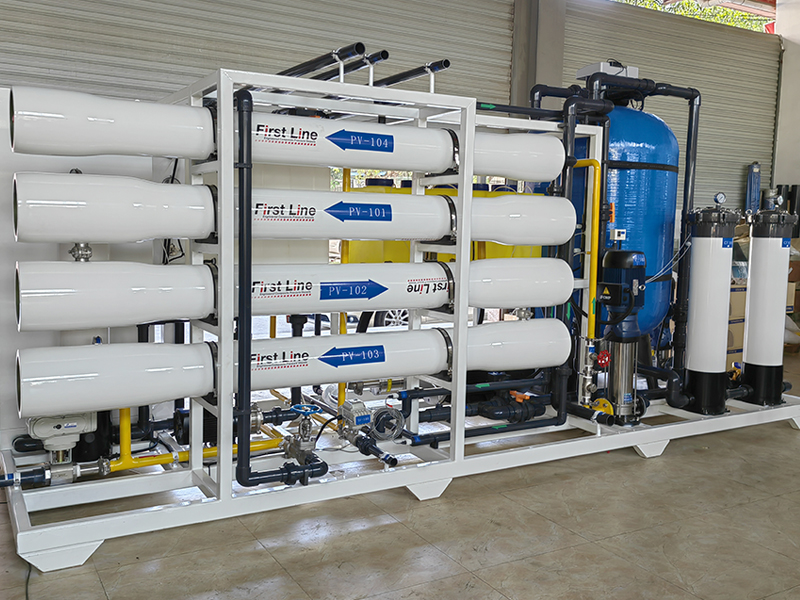
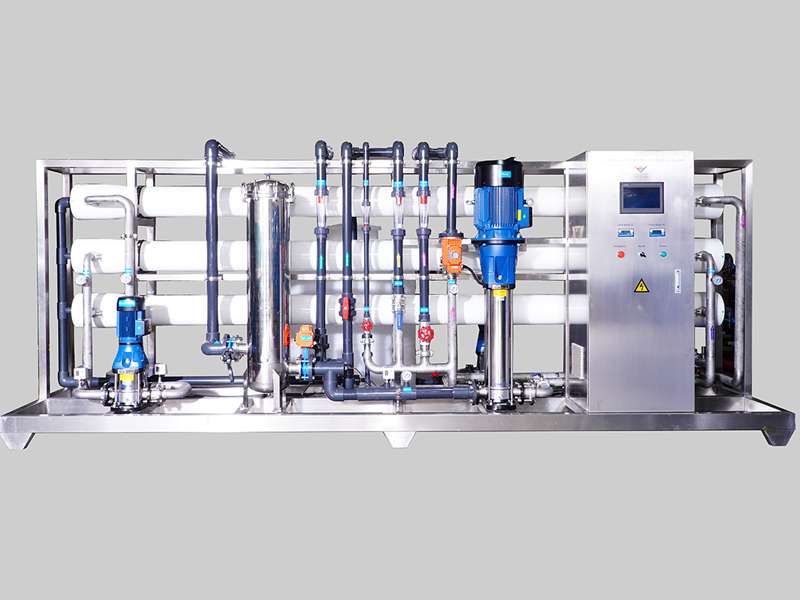
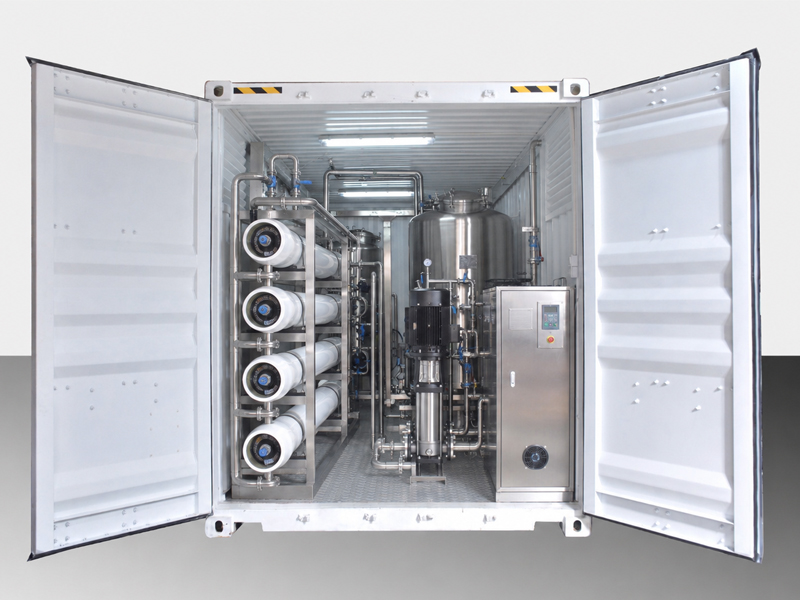
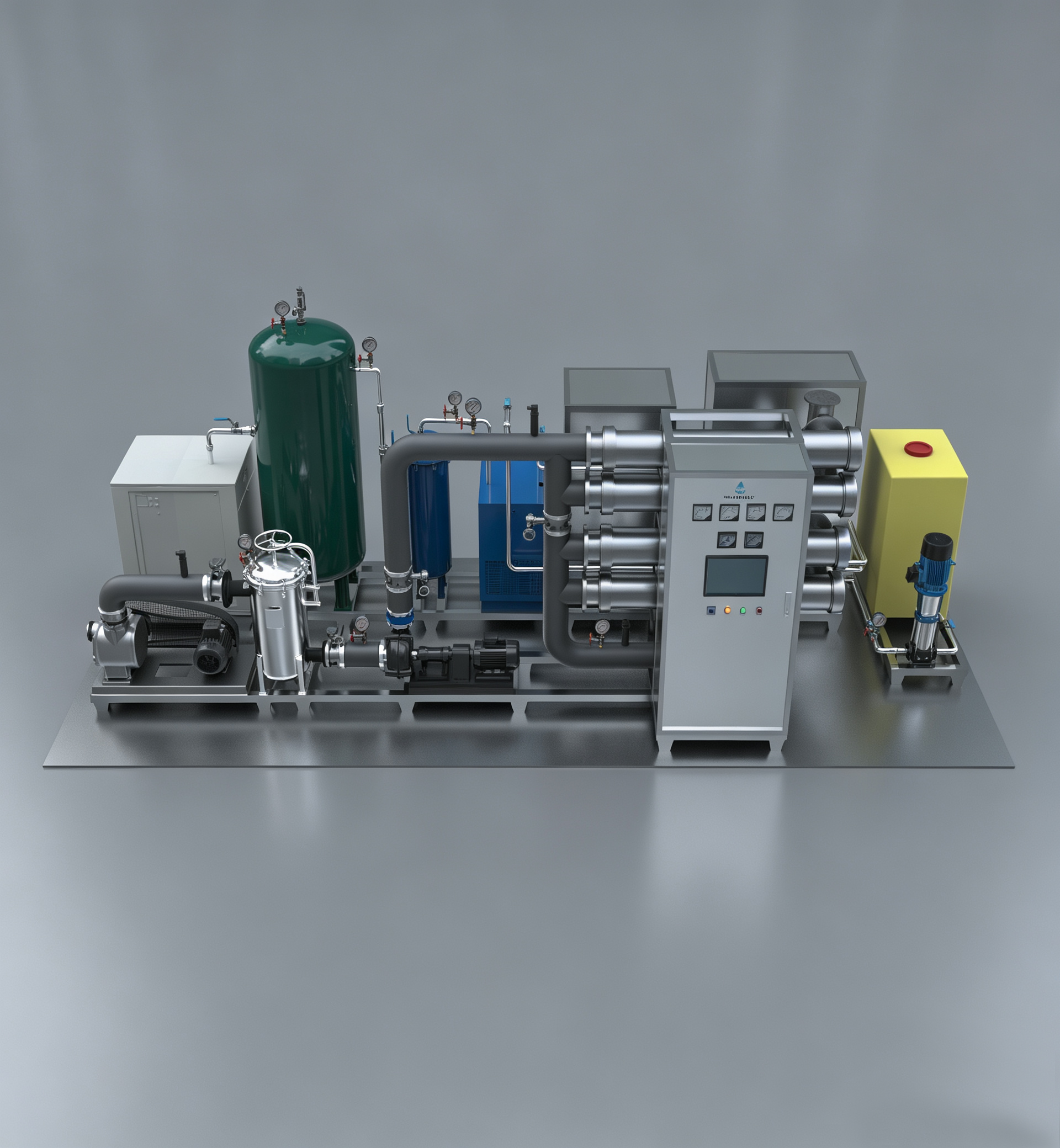
Our commercial and industrial reverse osmosis range can be configured for different feedwater sources, product water demands, automation levels and installation environments. Available arrangements may include compact systems, industrial skids, integrated pretreatment, dosing equipment, storage and optional post-treatment.
How Does an Industrial RO System Produce Purified Water?
An RO system normally combines source-water conditioning, pressure generation, membrane separation, monitoring, and product water collection. The exact process depends on the source water, the required water purity, and the operating risks identified during engineering.
1
Source Water
Raw water enters from a municipal supply, borehole, surface-water plant, or previously treated industrial water source.
2
Pretreatment
Sediment, hardness, chlorine, turbidity, organics, metals, or biological loading are controlled as required.
3
Fine Filtration
A sediment filter or fine cartridge filter helps protect downstream pumps and membrane elements.
4
High Pressure
A booster pump may stabilize the inlet, while a high-pressure pump provides the pressure required for membrane separation.
5
RO Separation
eedwater enters the pressure vessel and flows across the RO membrane. Part becomes permeate, while the remaining concentrate carries rejected salts away.
6
Post-Treatment
Depending on the application, post-treatment may include pH correction, remineralization, UV, polishing, degassing, ion exchange, or EDI.
Membrane Protection
Which Pretreatment Does a Industrial RO System Need?
The correct arrangement depends on the feedwater analysis and the limits of the selected membrane. No single configuration is suitable for every municipal, borehole, surface, seawater or reused-water source.
Suspended solids, chlorine, hardness, silica, iron, manganese, organics, turbidity and biological activity can each create a different operating risk.
✅ Multimedia filtration
✅ Activated carbon
✅ Water softening
✅ Antiscalant dosing
✅ Ultrafiltration
✅ Cartridge filtration
✅ Iron removal
✅ pH adjustment
What Components Determine Industrial RO System Performance?
Membranes, pumps, pressure vessels, instruments, controls, frame materials, and piping all influence system performance. A useful supplier comparison should therefore review the complete equipment configuration rather than focusing only on production capacity.
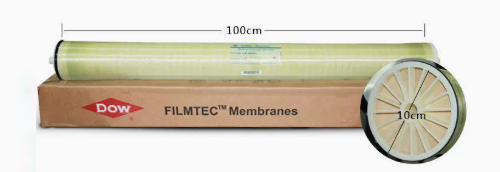
Membrane Elements
Selected for salinity, salt rejection, pressure, cleaning compatibility and product water target.
Pumps
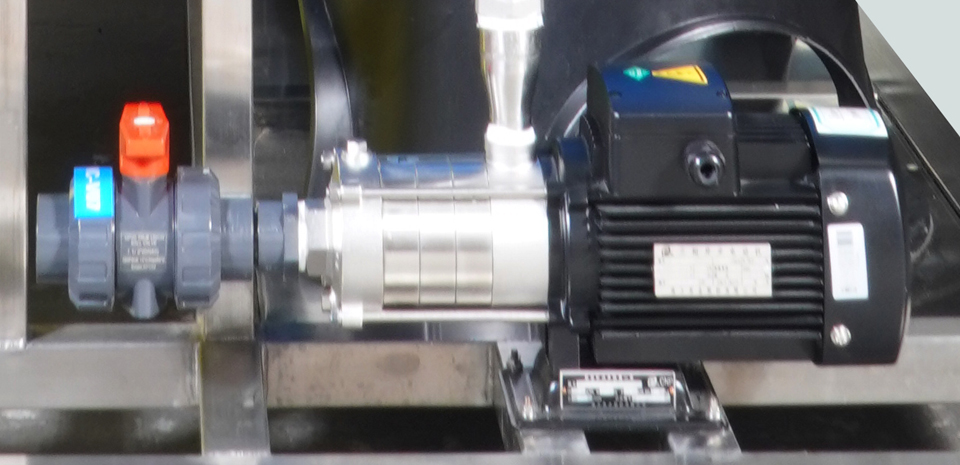
High-pressure and booster pumps should operate near the required hydraulic duty point.
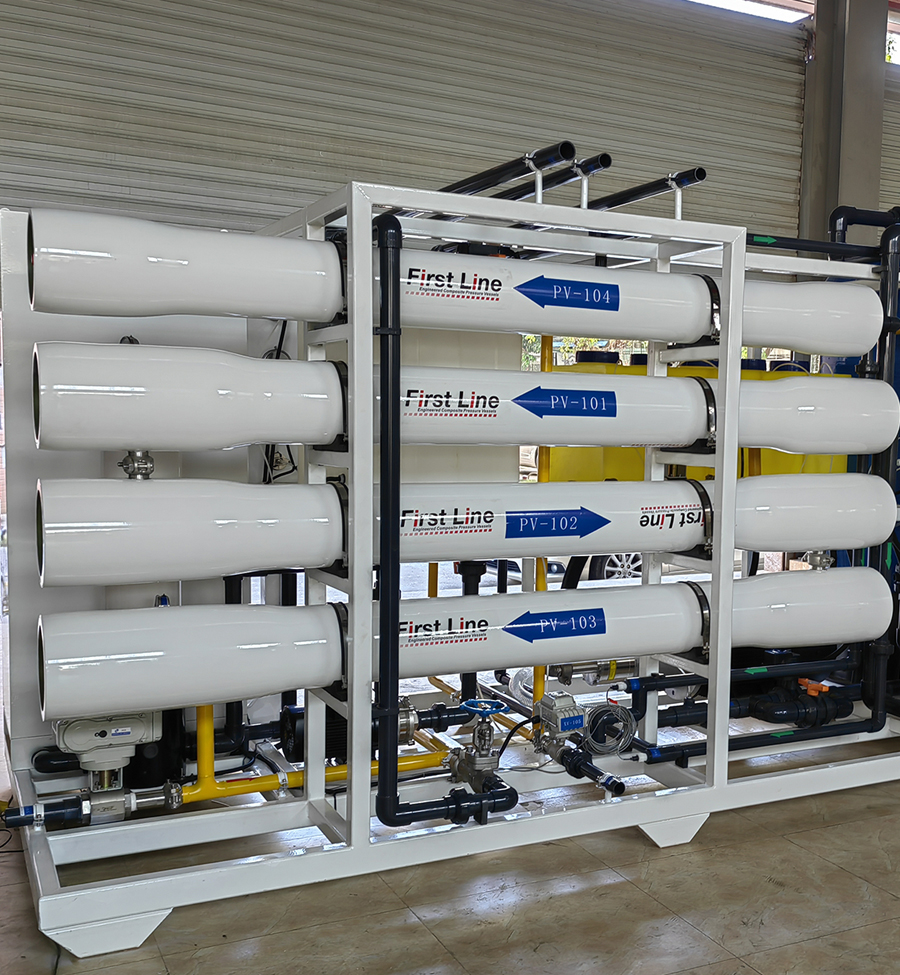
Pressure Vessels
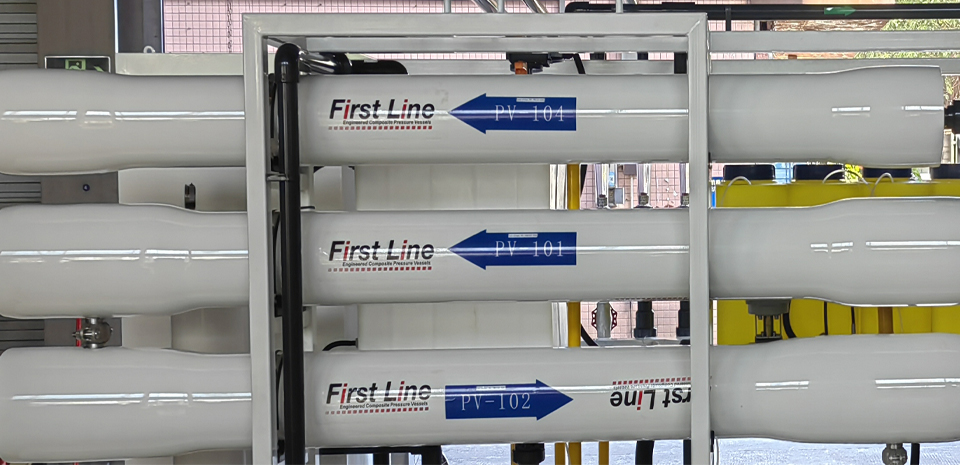
Matched to membrane size, element quantity, pressure rating and array configuration.
Controls
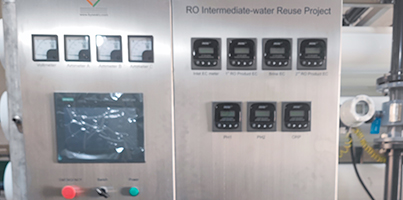
Conductivity, flow, pressure, level, alarms and flushing can be automated by PLC or microprocessor.
Product Water
What Product Water Quality Can Reverse Osmosis Achieve?
Permeate quality depends on feedwater composition, membrane selection, pressure, temperature, recovery, membrane condition and the overall configuration.
Conductivity and total dissolved solids are useful monitoring indicators, but two feedwaters with similar TDS may behave differently because their ionic composition is different.
Important: RO can reduce many dissolved substances, but it does not automatically guarantee that water is potable or suitable for every regulated process. Testing, storage hygiene, disinfection and applicable standards still matter.
Quality variables to confirm
Feedwater chemistry Analyze first
Salt rejection Membrane and condition dependent
Conductivity target Application-specific
Post-treatm Optional when required
Can the Industrial Reverse Osmosis System Be Customized?
Yes. An industrial reverse osmosis system can be customized around feedwater, capacity, product water targets, automation requirements, and installation constraints. Available features depend on the project and should not be assumed to be standard. Possible customization options include:
Skid-mounted or containerized construction
Customized membrane quantity and array
Project-specific product water capacity
Pretreatment integration
Antiscalant and chemical dosing systems
Stainless steel, coated steel, FRP, or engineered plastic materials
Microprocessor or PLC controls
Remote-monitoring readiness
Conductivity, flow, pressure, and level instrumentation
Optional product-water storage and distribution
UV, EDI, ion exchange, or other post-treatment
Electrical supply and control-panel adaptation
Customized piping connections
Layout adjustments for restricted footprints
How Do We Protect RO Membranes and Control Maintenance?
Membrane protection starts with stable feedwater conditions and effective pretreatment. Operators should monitor inlet and outlet pressures, permeate conductivity, concentrate flow, normalized production, pressure drop, chemical dosing, and cartridge-filter condition.
A membrane can foul because of suspended matter, organics, biological activity, or metal deposits. It can also lose performance due to mineral scaling, chemical exposure, oxidation, compaction, or unsuitable operating conditions. Trending operating data helps distinguish normal changes caused by temperature from actual performance decline.
Routine work may include cartridge replacement, instrument checks, dosing-system inspection, leak checks, flushing, performance review, and periodic cleaning. A statement such as membrane service “every 6-12 months” should be treated only as an example, not a universal schedule. Cleaning and replacement depend on feedwater quality, operating hours, pretreatment effectiveness, membrane condition, chemical compatibility, and manufacturer recommendations.
Technical Specifications for an Industrial RO System
Final values are confirmed after reviewing the feedwater analysis, capacity and project conditions.
Parameter
Typical Specification
Feedwater Source
Municipal water, groundwater, surface water, brackish water, seawater or pretreated industrial wastewater
Product Water Capacity
10–2,000 m³/day or customized
Product Water Flow
Customized according to hourly and daily demand
Feedwater TDS
Up to 10,000 mg/L for standard brackish-water configurations; higher TDS requires specialized design
Product Water TDS
Determined by feedwater quality, membrane selection, and required water standard
Salt Rejection
Typically 97–99.5%, depending on membrane type and operating conditions
Recovery Rate
Typically 50–85%; confirmed through feedwater and scaling analysis
Operating Pressure
Approximately 8–30 bar for typical brackish-water applications
Feedwater Temperature
Typically 5–40°C
Feedwater pH
Confirmed according to membrane and pretreatment requirements
RO Membrane Size
4-inch or 8-inch membrane elements
Membrane Configuration
Single-pass, double-pass, single-stage, or multi-stage
Pressure Vessel
FRP or stainless steel, selected according to operating pressure
High-Pressure Pump
Stainless steel centrifugal pump with optional VFD
Pretreatment
Multimedia filter, activated carbon, softener, ultrafiltration, chemical dosing, and cartridge filtration as required
Cartridge Filter
Typically 1–5 μm
Control System
Microprocessor or PLC with optional touchscreen HMI
Stainless steel or pressure-rated engineered piping
Low-Pressure Piping
UPVC, CPVC, stainless steel, or project-specific material
Electrical Supply
380–415 V, 50/60 Hz, three-phase, or customized
Installation Format
Skid-mounted, modular, or containerized
Cleaning System
Manual or automatic membrane flushing; optional CIP system
Optional Post-Treatment
UV, EDI, ion exchange, pH adjustment, remineralization, or disinfection
Automation Options
Automatic flushing, tank-level control, dosing interlocks, alarms, data logging, and remote-monitoring readiness
Application
Process water, boiler feedwater, cooling-tower makeup, food and beverage, electronics, pharmaceutical pretreatment, and water reuse
Why Work With Us?
A useful supplier should translate project data into a clear, explainable and serviceable equipment configuration.
01
Feedwater-Based Configuration
Pretreatment, membrane selection, recovery and pressure are reviewed against the available analysis.
02
Transparent Component Planning
Pumps, membranes, vessels, instruments, controls and materials can be defined in the proposal.
03
Factory Assembly & Inspection
Equipment can be assembled and checked before shipment according to the confirmed scope.
04
Project Documentation
Available documents may include drawings, specifications, guidance and component lists.
05
OEM & Integration Support
Layouts, interfaces, branding and equipment configurations can be adapted for partners.
06
Spare-Parts Planning
Recommended consumables and critical spares can be identified during project review.
Key Features & Benefits Of Industrial Revers Osmosis Systems
Good RO isn’t only about membranes. It’s about designing an entire system that protects those membranes—so you get stable output, predictable OPEX, and fewer “surprise” shutdowns.
Energy Efficiency & Cost Savings
High-flux membranes and energy recovery (for SWRO) reduce power draw. When you pair correct pretreatment with sensible recovery targets, you also cut chemical use and disposal cost over the system’s life.
Scalability & Flexibility
Modular skids make capacity expansion straightforward. Containerized units support fast “add-on” supply when demand spikes or when a remote site needs water yesterday—not next quarter.
Advanced Membrane Technology
High-rejection membranes deliver ultra-pure permeate. Automated controls monitor key signals (pressure, conductivity, flow) to keep recovery stable and flag maintenance before performance drops.
Quality & Compliance
Industrial-duty build quality with documented testing helps meet project requirements. If you need add-ons like UV, EDI, or specific chemical dosing, we design them as part of the complete process.
Commercial and Industrial RO Applications
In my experience, buyers don’t lose sleep over the membrane model number. They lose sleep over reliability, service response, and whether the system keeps producing clean water when conditions aren’t perfect.
Food & Beverage
Stable ingredient/process water for brewing, bottling, dairy—designed to reduce downtime and scaling.
Pharma & Electronics
High-purity water, often with EDI polishing for strict conductivity and quality targets.
Power & Utilities
Boiler feed and cooling tower makeup; integration with ZLD strategies when required.
Oil, Gas & Mining
On-site desalination and reuse to reduce freshwater imports and stabilize operations in remote regions.
Municipal & Commercial
Drinking supply support; containerized options for remote communities and fast deployments.
Emergency & Remote Response
Rapid deployment drinking water packages for disaster relief, camps, and temporary sites.
What Information Should You Provide for RO System Selection?
An accurate recommendation requires project data rather than only a requested GPD figure. Please provide:
Feedwater source and recent water analysis
Required product water quality
Average and peak hourly demand
Required daily output
Planned operating hours
Desired recovery, when already specified
Inlet pressure and temperature range
Installation environment and available footprint
Electrical supply
Concentrate-discharge restrictions
Required automation level
Applicable technical or regulatory standards
Project location and expected schedule
Begin with hourly demand, daily consumption, operating hours, peak usage, and available product-water storage. Then adjust the required nominal capacity for feedwater temperature, salinity, pressure, recovery, and expected membrane performance. Selecting solely from a published GPD number can result in insufficient production or unnecessary equipment cost.
A useful analysis normally includes TDS or conductivity, pH, hardness, alkalinity, chloride, sulfate, silica, iron, manganese, turbidity, suspended solids, and relevant organics or microbiological indicators. The exact testing scope depends on the source water and application. Source variability should also be considered when one sample may not represent seasonal conditions.
Some form of protection is usually required, but the arrangement varies. Relatively stable municipal water may need different treatment from borehole or surface water. Chlorine, sediment, hardness, metals, organics, and biological activity should be assessed before selecting filtration, activated carbon, softening, antiscalant, ultrafiltration, or chemical dosing.
Recovery is project-specific. It depends on feedwater chemistry, salinity, temperature, membrane arrangement, concentrate limits, pretreatment, and scaling risk. Pursuing higher recovery without checking these factors may reduce reliability or increase cleaning requirements. The recommended value should be confirmed through membrane design and water-analysis review.
There is no universal interval. Cleaning is normally triggered by performance trends such as normalized flow decline, increased pressure drop, or reduced rejection rather than by the calendar alone. Replacement depends on membrane condition, feedwater, operating practices, chemical exposure, and whether cleaning can restore acceptable performance.
RO may be part of a potable-water treatment system, but the RO unit alone does not guarantee compliance. Source-water risks, disinfection, storage, post-treatment, distribution hygiene, laboratory testing, and local regulations must be addressed. The finished water should be verified against the applicable drinking-water standards before human consumption.
Yes, provided the hydraulic, electrical, control, and water-quality interfaces are reviewed. Integration may require modifications to tanks, pumps, piping, pretreatment, dosing, instrumentation, or control logic. Existing upstream and downstream equipment should be evaluated before the final configuration is approved.
Provide the feedwater source and analysis, required capacity, operating hours, product water target, application, installation location, electrical supply, available footprint, automation preference, inlet conditions, discharge restrictions, and applicable standards. More complete project data allows the supplier to prepare a more relevant preliminary configuration and commercial quotation.
Yes, provided the hydraulic, electrical, control, and water-quality interfaces are reviewed. Integration may require modifications to tanks, pumps, piping, pretreatment, dosing, instrumentation, or control logic. Existing upstream and downstream equipment should be evaluated before the final configuration is approved.
Request a Technical Industrial Reverse Osmosis Proposal
Share your actual project data so the preliminary design reflects your water source, production demand and installation conditions.