Talk To Our Engineer Now
Before you go, our engineers can review your water quality, process needs, and budget to suggest the right system - share a few details now and get expert feedback

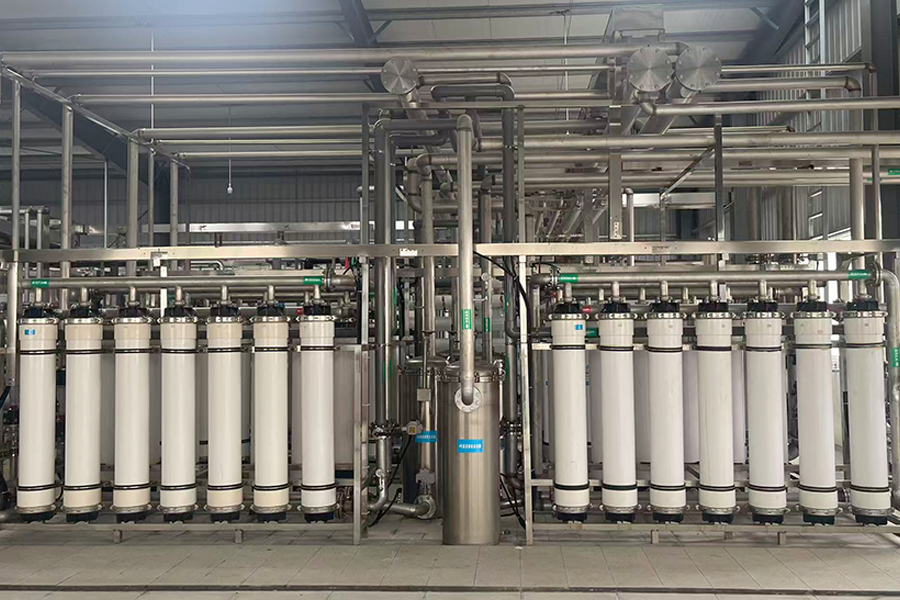
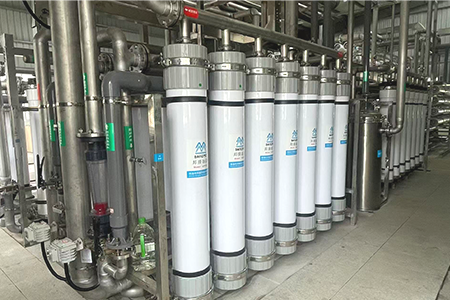
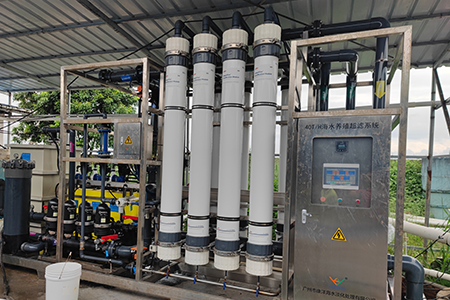
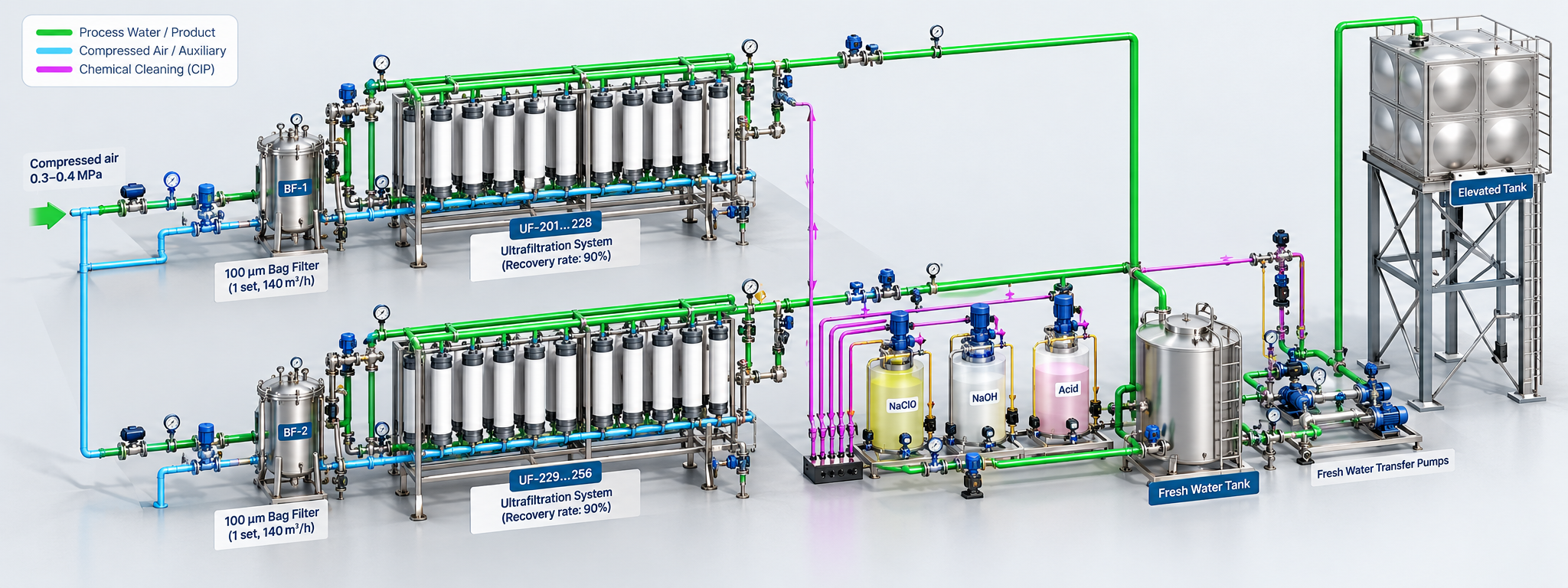
We determine how the UF stage should be configured and what pretreatment, post-treatment or system integration may be required. We can then design the system around the selected membrane configuration, pumps, valves, piping, instrumentation, controls and cleaning functions.
| Design Factor | What We Evaluate | Why It Matters |
| Feed water quality | Suspended solids, turbidity, colloids and fouling potential | Influences pretreatment and cleaning strategy |
| Required flow | Normal flow, peak demand and operating hours | Influences membrane area and system size |
| Product water target | Process or downstream treatment requirement | Determines whether UF alone is sufficient |
| Downstream RO | Existing or planned RO system | Influences UF treatment objectives |
| Operating mode | Continuous or intermittent | Influences controls and system configuration |
| Cleaning strategy | Backwash, flushing and chemical cleaning | Influences automation and maintenance design |
| Site conditions | Footprint, utilities and installation environment | Affects skid layout and plant integration |
| Technology | Primary Separation Role | Typical Treatment Position |
| Microfiltration | Larger suspended particles and microorganisms | Clarification and particulate control |
| Ultrafiltration | Fine suspended solids, colloids and larger molecular material | Pretreatment, clarification and reuse |
| Nanofiltration | Selected dissolved organics and multivalent ions | Softening and selective dissolved-solids treatment |
| Reverse Osmosis | Dissolved salts and smaller dissolved constituents | Desalination and high-purity treatment |
We use ultrafiltration as a physical membrane barrier when a project requires reliable reduction of suspended matter, colloids and fine particulate contamination before the next treatment stage or final use.
Unlike processes designed primarily for dissolved-salt removal, UF works mainly by size exclusion. Water and smaller dissolved substances pass through the membrane, while particles larger than the effective membrane separation range are retained. This distinction is important when we determine whether UF alone is suitable or whether it should be integrated with other treatment technologies.
For example, when the final target includes dissolved-solids reduction, we may use ultrafiltration ahead of reverse osmosis rather than treating UF as a substitute for RO. UF can help reduce particulate and colloidal loading on downstream RO membranes and improve the stability of the overall treatment train.
In a typical pressurized UF system, feed water enters the membrane modules and a pressure differential moves water through the membrane structure. Water and sufficiently small dissolved substances pass through the membrane and become permeate, while suspended solids, colloids and larger particulate matter are retained.
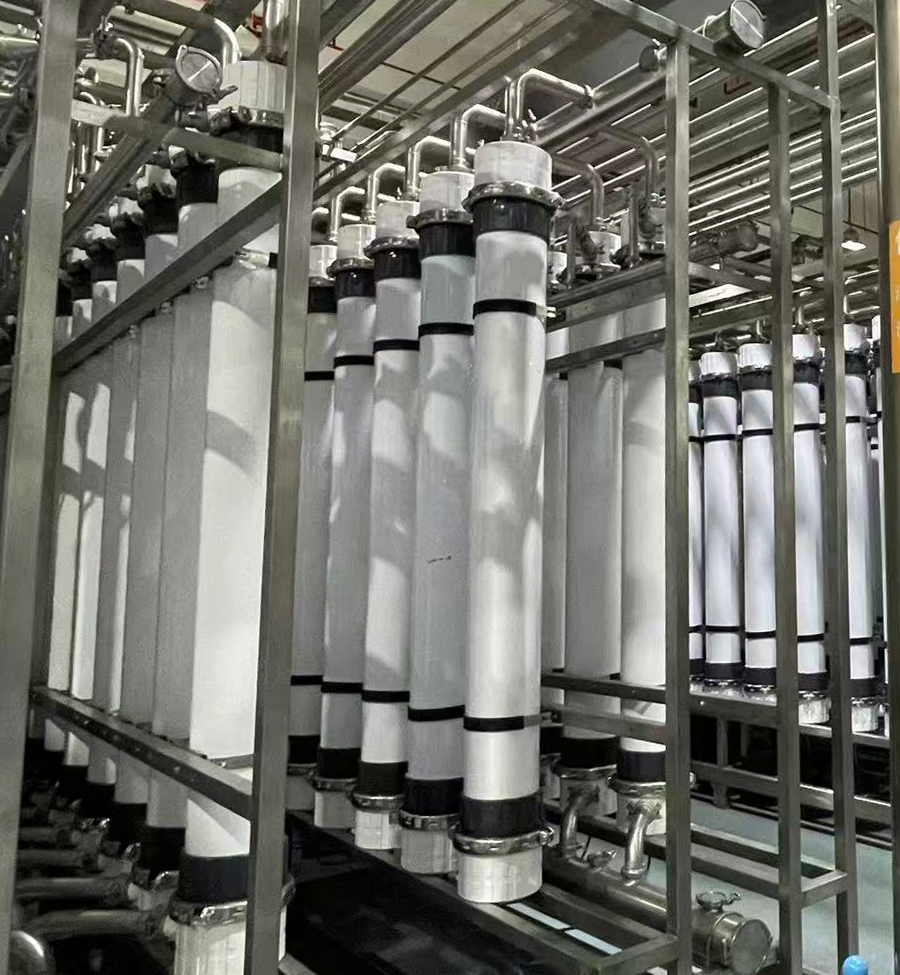
Many industrial UF systems use hollow fiber membranes because they provide a high membrane area within a compact module and can be cleaned by backwashing. Depending on the membrane we select, the system may use an inside-out or outside-in filtration configuration. Both arrangements are commercially used in industrial UF systems.
In an outside-in configuration, feed water contacts the outside of the membrane fibers and filtered water passes through the membrane wall into the fiber lumen. Current commercial PVDF UF modules commonly use this arrangement.
As contaminants accumulate on the membrane surface, we incorporate backwashing, flushing and, where required, chemical cleaning into the operating sequence. The exact cycle depends on the membrane type, feed water conditions and system design.
We integrate ultrafiltration into different industrial treatment trains depending on what the water needs before its next process stage.
RO pretreatment
We use UF before reverse osmosis when suspended solids and colloids need to be controlled before the RO membrane stage. This combination is widely used because UF and RO perform different separation functions rather than competing with each other.
Surface water treatment
River, reservoir and similar source water can contain changing levels of turbidity, algae, suspended matter and colloids. We can evaluate UF as part of a treatment train after suitable screening and pretreatment.
Industrial process water
For manufacturing plants that require lower particulate loading before production equipment or further purification, we can incorporate UF as an intermediate membrane filtration stage.
Industrial water reuse
In water recycling projects, we can use ultrafiltration to polish treated wastewater before reuse or before tighter downstream membrane treatment.
Cooling and utility water
Where the objective is to reduce suspended material and provide more consistent water to a utility system, UF can be evaluated together with the existing water treatment process.
Food and beverage pretreatment
UF may be incorporated before downstream purification where process requirements permit. We review feed composition, sanitation requirements, membrane materials and the final water quality target before determining the configuration.
Municipal and infrastructure projects
We can also integrate ultrafiltration into larger water treatment systems where a membrane barrier is required before reuse, further purification or distribution, subject to the applicable project and regulatory requirements.
Feed water quality has a direct effect on membrane selection, pretreatment requirements, operating strategy and cleaning frequency.
Before we finalize a UF design, we want to understand turbidity, suspended solids, colloidal material, organic loading, biological activity and other constituents that may foul or block the membrane. A system treating relatively stable filtered water should not automatically be designed the same way as one handling variable surface water or industrial wastewater.
We also evaluate whether upstream protection is required. This may include screening or another treatment step to prevent oversized debris and excessive contaminant loading from reaching the membrane.
Additional pretreatment may be considered if the water chemistry or fouling potential justifies it. We do not add treatment stages simply because they are commonly used; every additional process should solve an identifiable water-quality problem.
The downstream process also changes the engineering objective. A UF system supplying an RO plant may be designed around different treatment priorities from a UF system supplying utility water or a reuse network.
Fouling management is part of our UF system design from the beginning.
During filtration, suspended matter gradually accumulates on the membrane surface. We therefore incorporate cleaning sequences according to the selected membrane and feed water characteristics. These may include backwash, forward flush, air-assisted cleaning where the membrane configuration supports it, and periodic chemical cleaning.
Outside-in hollow fiber systems are commonly designed with backwashing and, in some configurations, air-assisted fouling control.
We also consider the instrumentation required to monitor system behavior. Changes in flow, pressure and transmembrane pressure help operators understand whether membrane resistance is increasing and whether additional cleaning may be necessary.
We do not specify a universal cleaning interval because real cleaning frequency depends on the water source, fouling load, membrane selection, pretreatment and operating conditions.
For us, operation and maintenance is therefore a design issue, not simply an after-sales issue. The UF skid should provide appropriate automation, instrumentation and cleaning functions from the start.
We use UF primarily to separate suspended solids, colloids, particulate matter and larger molecular material from water through a physical membrane barrier. Depending on the selected membrane and application, UF can also provide a barrier against microorganisms. Final removal performance should always be confirmed against the membrane specification and project requirements.
UF is not our primary technology for dissolved-salt removal. Most dissolved salts pass through an ultrafiltration membrane. If your project requires desalination or substantial dissolved-solids reduction, we would normally evaluate UF as pretreatment followed by reverse osmosis or another suitable downstream process.
We often evaluate UF before RO when suspended solids, colloids or variable particulate loading need to be controlled before the reverse osmosis membrane stage. UF is widely used for this purpose, but we still review the complete feed water analysis because other contaminants may require additional pretreatment.
We do not apply one pore size to every project. Commercial industrial UF membranes are available with different nominal ratings; current PVDF hollow fiber products, for example, include 0.03 μm membranes. We confirm the pore size and membrane characteristics according to the module selected for the project.
We normally need your water source, feed water analysis, target product water quality, required flow, daily operating hours and downstream treatment process. Information about footprint, utilities, automation and site conditions also helps us configure the equipment more accurately.
We design UF systems with routine hydraulic cleaning such as backwashing or flushing and, when required, chemical cleaning. The exact procedure depends on the membrane material and the type of foulants present in the feed water. We therefore determine the cleaning strategy together with membrane and process selection.
Suspended solids, colloids, organic material, biological growth and precipitated substances can all contribute to fouling. We use feed water analysis and treatment-process review to identify these risks and determine whether screening, pretreatment or a different operating strategy is required.
Yes. We can adjust the membrane configuration, pretreatment, membrane area, system arrangement, automation, instrumentation and cleaning strategy according to the actual feed water and project requirements. Two projects with the same flow rate may therefore require different UF designs.
Send us your water source, feed water analysis, required treated-water flow, daily operating hours, target water quality, downstream process and project location.
If the UF system will be installed before an existing RO plant, send us the available RO design information as well.
We can review the data, determine how ultrafiltration should fit into your treatment process, and develop a UF system configuration around your actual operating conditions.
Request a UF System Proposal
Discuss Your Water Analysis With Aqurion
Talk to an Aqurion Water Treatment Engineer